
I look at Almawadahit .com USA as a search phrase that needs careful explanation because it combines a website name, a country intent, and a reader concern in one query. When people search this keyword, they may be trying to understand whether Almawadahit.com is available in the United States, what kind of website it is, whether it is safe to use, and how its information should be evaluated. Based on the public pages I reviewed, Almawadahit.com presents itself as a “Tech and Trends” website and publishes content across topics such as home improvement, business, architecture, celebrity cars, celebrity lifestyle, and celebrity homes.
In my view, the most useful way to approach this topic is not to overstate what the website is or claim that it has a specific U.S. office unless public evidence clearly proves it. A better approach is to explain what a U.S. reader can see, what the site appears to publish, how its privacy and contact pages describe user interaction, and what safety steps readers should take before relying on any online information source. This article gives a practical, balanced guide for anyone searching for Almawadahit .com USA and wanting a clear answer without hype.
Key Takeaways About Almawadahit .com USA
Almawadahit .com USA appears to be a user search phrase rather than a separate official U.S. version of the website. The public website I reviewed uses the Almawadahit.com domain, describes itself through the label “Tech and Trends,” and lists content categories and posts from 2026. Its homepage shows topics such as smart home upgrades, APS summaries, celebrity cars, celebrity lifestyle, and celebrity net worth, which suggests a broad informational publishing model rather than a single-service platform.
For U.S. readers, the important point is that access to a website does not automatically mean local registration, local customer support, or U.S.-specific legal coverage. We can read the site, review its contact page, examine its privacy policy, and compare its advice with authoritative U.S. sources. That is the safest way to use any informational website that appears in search results, especially when the keyword includes a country such as USA.
I believe readers should treat Almawadahit.com as an information source to evaluate, not as an authority to accept blindly. Its privacy policy says it may collect personal information such as name, email address, contact information, and form details, along with non-personal information such as IP address, browser type, device information, pages visited, and browsing patterns. That is not unusual for websites, but it does mean U.S. users should understand what they share before submitting forms, subscribing, or contacting the site.
What Almawadahit .com USA Means for U.S. Searchers
The phrase Almawadahit .com USA can mean several things depending on the user’s intent. Some searchers may be looking for a U.S. version of the website. Others may want to know whether the site has U.S.-focused content. A third group may be checking whether the domain is trustworthy before clicking, submitting information, or using content for research.
From my perspective, the safest interpretation is that the keyword reflects user curiosity about how Almawadahit.com relates to American readers. Public pages show a website with broad categories and general informational articles, but I did not find enough public evidence to claim that Almawadahit.com operates a dedicated U.S. branch. The contact page lists the email address admin@almawadahit.com and says readers can use the page for questions, feedback, suggestions, partnerships, and support.
That distinction matters. A website can be accessible in the United States without being based in the United States. A website can publish content useful to U.S. readers without being governed only by U.S. editorial standards. A website can mention global topics without offering country-specific support. When I analyze a phrase like Almawadahit .com USA, I separate access, audience, ownership, content relevance, and legal responsibility.
For example, a U.S. homeowner might find an article about smart home upgrades useful because the topic is common in American housing markets. However, if that article links to service providers, product claims, energy guidance, or property value advice, the reader should still compare the information with local building codes, utility programs, product warranties, and trusted U.S. sources.
How Almawadahit.com Presents Itself Online
Almawadahit.com presents itself publicly as a “Tech and Trends” website. The homepage shows navigation items including Home, Celebrity Homes, Celebrity Net Worth, Celebrity Cars, Celebrity Lifestyle, Contact Us, and Privacy Policy. It also displays trending and featured posts such as “Smart Home Upgrades That Instantly Improve Comfort and Property Value,” “Benefits of Outsourcing APS Summary?,” “Celebrity Cars: Expensive Cars Owned by Famous Stars,” and “Celebrity Lifestyle: How Famous Stars Live Off Camera.”
In my analysis, this structure suggests a content-publishing website designed for broad search interest. The topics are not limited to one industry. They move across lifestyle, business, technology, home improvement, and celebrity-related content. That can be useful for casual readers, but it also means readers need to judge each article individually. A strong article about home technology does not automatically prove equal strength in legal, medical, financial, or business topics.
The business category page shows posts such as “Nail Technician Training and Beauty Career Path,” “Common Probate Mistakes Families Should Avoid,” “Secure Your Future with an Expert Employment Contract Solicitor,” and “How to Use Verified Link Directories for Business Research.” These topics can affect real decisions, so I would advise U.S. readers to use them as starting points rather than final guidance.
Almawadahit .com USA and Content Categories
Almawadahit .com USA may attract U.S. searchers because the site covers topics that overlap with American reader interests. Home improvement, smart devices, business workflows, celebrity lifestyle, and career training are all search-heavy topics in the United States. However, the website’s broad category structure also requires careful reading because different topics need different levels of verification.
A home improvement article may be useful for general ideas, but it should not replace professional advice from a licensed contractor, electrician, HVAC professional, insurance expert, or local code authority. A business article may explain concepts clearly, but it should not replace legal counsel, tax advice, or official regulatory guidance. A celebrity lifestyle article may be entertaining, but net worth and lifestyle claims often depend on public estimates rather than direct confirmation.
I have found that readers get the best results when they classify content before trusting it. Entertainment content can be read for interest. General technology content can be used for awareness. Business and legal content should be cross-checked. Health, finance, and legal claims should be treated with the highest caution because mistakes in those areas can cause real harm.
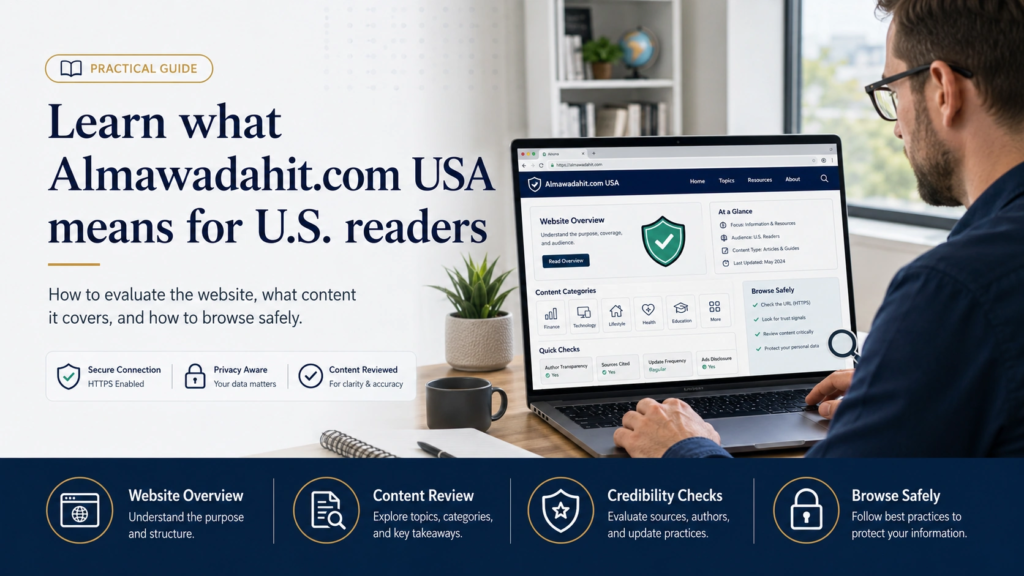
Useful Ways to Evaluate Almawadahit.com Content
The table below explains how I would evaluate different types of content on Almawadahit.com from a U.S. reader’s perspective. The point is not to dismiss the site, but to use a practical trust filter before acting on information.
| Content Type | What It May Offer | What U.S. Readers Should Check | Best Use |
|---|---|---|---|
| Tech and trends articles | General explanations of digital topics, tools, and online behavior | Whether claims are current, sourced, and specific | Background reading |
| Home improvement content | Ideas for comfort, smart devices, and property upgrades | Local codes, contractor advice, utility rebates, product warranties | Planning inspiration |
| Business articles | Introductory guidance on workflows, careers, and services | Legal accuracy, U.S. regulations, service-provider claims | Research starting point |
| Celebrity lifestyle content | Entertainment and public-interest reading | Whether figures, assets, and claims are sourced | Casual reading |
| Privacy and contact pages | Information about data collection and communication | What data is collected and how to contact the site | Website safety review |
The biggest takeaway is that readers should match the level of trust to the level of risk. If an article gives general ideas, casual reading may be enough. If an article affects money, privacy, employment, contracts, health, property, or legal rights, I would verify it through official or professional sources before acting.
Privacy Considerations for U.S. Users
The privacy policy is one of the first pages I review when evaluating a website. Almawadahit.com’s privacy policy says the site may collect personal details users provide directly, including name, email address, contact information, and other details submitted through forms. It also says the site may collect non-personal information such as IP address, browser type, device information, pages visited, and browsing patterns.
This matters for U.S. visitors because many users casually submit contact forms without considering what they are giving away. A name and email address may seem harmless, but together they can become part of a marketing list, support record, partnership inquiry, or data trail. Device and browsing information can also be used for analytics and personalization.
The FTC explains why personal information deserves careful treatment:
“Your personal information is valuable. That’s why hackers and scammers try to steal it.”
Federal Trade Commission
I believe this quote is relevant because it reminds us that privacy is not only about whether a website looks professional. It is about the value of the information users provide. Before submitting information to Almawadahit.com or any other site, U.S. readers should ask whether the message requires personal details, whether an email is enough, and whether sensitive information can be avoided.
Contact and Support Information
The Almawadahit.com contact page lists admin@almawadahit.com as the direct email address for inquiries, suggestions, concerns, and support. It also says readers can contact the site for feedback, support, partnerships, and general inquiries.
From my perspective, a visible contact page is a useful sign, but it is not a complete trust signal. A reader should still look for transparency around ownership, editorial policy, author credentials, correction procedures, and source quality. If the site is being used for casual reading, an email contact may be enough. If the site is being used for business partnerships, paid placements, guest posting, advertising, or professional advice, the reader should ask for clear terms in writing.
A practical example helps here. Suppose a U.S. business owner finds an article about link directories or outsourcing and wants to collaborate. The safe next step is not to send payment immediately. The safer step is to email the listed contact, ask for service terms, request examples, confirm deliverables, verify business identity, and avoid sharing financial details until the relationship is clear.
How U.S. Readers Should Browse Almawadahit .com USA Safely
I recommend a simple safety process for U.S. readers who land on Almawadahit.com through search. First, check the exact domain in the address bar. The domain should match the site you intended to visit. Typos, lookalike domains, extra extensions, and unfamiliar redirects can create confusion.
Second, look for HTTPS and a browser padlock, but do not treat that alone as proof of trust. HTTPS helps protect data transmission, but it does not prove that content is accurate or that a business is reliable. Third, read the privacy policy before submitting forms. Fourth, avoid sending sensitive personal, financial, medical, or legal information unless you have a specific reason and understand how the information will be used.
USA.gov gives a useful baseline for thinking about privacy expectations:
“USA.gov does not collect personal information when you visit our website unless you choose to provide that information.”
USA.gov
This quote is useful because it shows a clear privacy principle: users should know when they are choosing to provide personal information. Almawadahit.com’s policy says it may collect information users provide and certain automatically collected data, so U.S. readers should make informed choices before interacting with forms, newsletters, comments, or contact options.
Step-by-Step Guide to Checking Almawadahit.com Before Relying on It
Here is the practical process I would follow before relying on information from Almawadahit.com for a U.S.-based decision.
Step 1: Confirm the Exact Page and Topic
Start by checking the exact page title, author label, publication date, and category. The homepage shows posts with dates from May and June 2026, and several posts are attributed to “adminhere.” A date helps you judge freshness, while an author label helps you understand whether the article is written by a named expert, a general editorial account, or an anonymous site administrator.
Step 2: Look for Sources Inside the Article
A reliable article should cite sources when it makes factual claims. If an article discusses U.S. law, workplace contracts, healthcare records, property value, energy savings, or online security, I would expect references to official sources, recognized organizations, or qualified professionals. If sources are missing, use the article as a starting point only.
Step 3: Compare With Official U.S. Guidance
For privacy, scams, identity theft, and online safety, compare advice with the FTC, USA.gov, and other official resources. For energy and home upgrades, compare with Energy.gov, ENERGY STAR, local utility programs, licensed professionals, and manufacturer documentation. For legal topics, compare with state bar resources or an attorney licensed in your state.
Step 4: Avoid Sharing Sensitive Information
If you contact the site, keep your message simple. Share only what is needed. A general question does not require a home address, Social Security number, bank information, private medical history, or legal documents. If a website asks for sensitive information without a clear reason, stop and verify first.
Step 5: Watch for Red Flags
Red flags include unrealistic promises, pressure to pay quickly, vague ownership, missing terms, copied content, broken contact details, aggressive pop-ups, unusual redirects, and claims that cannot be verified elsewhere. A website can still be legitimate while having minor editorial issues, but multiple red flags should make readers cautious.
Practical Examples for U.S. Readers
Consider a homeowner in Texas searching for smart home ideas. They find an Almawadahit.com article about smart thermostats, lighting, leak sensors, Wi-Fi, and security devices. That content may help them build a checklist, but the homeowner should still check product compatibility, electrical requirements, warranty terms, and local installation rules before buying devices or hiring a contractor.
Now consider a small business owner in New York reading a business article about outsourcing APS summaries. The article may explain why medical-document summaries can save time in insurance or healthcare workflows. However, if the business handles protected health information, the owner must consider U.S. privacy laws, contracts, vendor security, and professional compliance before outsourcing anything.
A third example is a reader browsing celebrity net worth or lifestyle content. Entertainment articles can be enjoyable, but net worth claims are often estimates unless supported by financial records, court filings, company disclosures, property records, or direct statements. I would treat that content as general interest rather than confirmed financial reporting unless the article provides strong sources.
Common Mistakes Readers Make With Sites Like Almawadahit.com
One common mistake is assuming that a polished website is automatically authoritative. Design matters, but authority comes from transparent sourcing, clear authorship, editorial standards, and accurate updates. A site can look modern and still publish weak information.
Another mistake is treating all topics equally. A general article about smart lighting does not carry the same risk as advice about employment contracts, probate, healthcare documentation, or financial decisions. The more serious the outcome, the more carefully the reader should verify the information.
A third mistake is ignoring the privacy policy. Almawadahit.com’s privacy policy describes categories of information the site may collect and says users have choices such as managing cookies, opting out of newsletters, and requesting access, correction, or deletion of personal data. That information is useful, but readers still need to decide what they are comfortable sharing.
Trust Checklist for Almawadahit .com USA
The table below gives a quick trust checklist for U.S. readers. I would use this before treating any article as reliable enough to influence a decision.
| Trust Question | Why It Matters | What I Would Look For |
| Is the domain correct? | Lookalike domains can mislead users | Exact spelling, HTTPS, no suspicious redirects |
| Is the article dated? | Online information can become outdated | Clear publication or update date |
| Is the author clear? | Expertise depends on who wrote the content | Named author, credentials, or editorial accountability |
| Are sources included? | Claims need support | Links to official, expert, or primary sources |
| Is the topic high-risk? | Some advice can affect money, rights, health, or safety | Extra verification for legal, medical, financial, or safety claims |
| Is the contact method visible? | Readers may need support or corrections | Contact page, email address, response expectations |
| Does the privacy policy explain data use? | Users should understand data collection | Personal data, cookies, analytics, opt-out options |
The most important takeaway is that trust is not one signal. It is a combination of domain accuracy, transparent authorship, useful sourcing, safe data practices, and topic-specific verification.
Expert-Style Recommendations for Using Almawadahit.com in the USA
My recommendation is to use Almawadahit.com as a discovery source, then verify important claims through primary sources. For light topics, such as home comfort ideas or celebrity lifestyle reading, that may be enough. For serious topics, such as contracts, probate, claims review, health documentation, or business compliance, verification is essential.
I would also recommend saving the page URL and date when using any article for research. Online content can change. If you use an article as a reference, record when you accessed it and what claim you used. This is especially helpful for students, bloggers, researchers, and business owners who may need to revisit the source later.
For privacy, use a separate email address for general website inquiries when possible. Do not share sensitive information through a contact form unless necessary. Use strong passwords if you create accounts anywhere online. The FTC advises users to make passwords long and notes that a strong password should be hard to guess.
How Almawadahit.com Compares With a Dedicated U.S. Information Source
A dedicated U.S. information source usually states its U.S. scope clearly. It may refer to U.S. laws, agencies, state rules, tax systems, consumer protections, and local market conditions. Almawadahit.com, based on the public pages reviewed, appears broader and more general. Its categories are not limited to U.S.-specific information.
That does not make the site useless for U.S. readers. It simply means readers should separate general usefulness from local authority. A smart home article can still be helpful in the United States if it explains practical upgrades. A business article can still introduce a concept. But when the topic depends on U.S. law, state licensing, taxes, healthcare privacy, employment rules, or consumer protection, a U.S. reader should confirm locally.
In my view, this is the most balanced position: Almawadahit .com USA is best understood as a search query from U.S. readers who want clarity about a broad informational website. The site may be accessible and useful for general reading, but it should not be treated as a dedicated U.S. government, legal, medical, or financial authority.
Conclusion
Almawadahit .com USA is best approached with curiosity and caution. I see Almawadahit.com as a broad “Tech and Trends” content website that may be useful for general reading across home improvement, business, technology, and lifestyle topics. At the same time, I would not advise U.S. readers to treat every article as final authority, especially when a topic affects privacy, money, legal rights, healthcare, property decisions, or business compliance.
The practical lesson is simple: read the site, understand its categories, check its privacy policy, use its contact page carefully, and verify high-risk claims through official or qualified sources. We can benefit from online information without surrendering judgment. Before acting on anything important, compare the article with U.S.-specific guidance and avoid sharing sensitive personal details unless there is a clear reason. That approach lets readers use Almawadahit.com more safely and intelligently.
Frequently Asked Questions
What Is Almawadahit .com USA?
Almawadahit .com USA is a search phrase people may use when looking for Almawadahit.com from the United States or trying to understand whether the website has U.S.-relevant content. Based on public pages, Almawadahit.com is a “Tech and Trends” website with broad categories including home improvement, business, celebrity lifestyle, celebrity cars, and celebrity homes. I would treat the phrase as a U.S. search intent rather than proof of a separate American version of the site.
Is Almawadahit.com Available in the USA?
Almawadahit.com appears publicly accessible online, so U.S. readers may be able to visit it through a normal browser. However, availability is not the same as having a dedicated U.S. office, U.S. editorial team, or U.S.-specific legal coverage. In my view, readers should use the website as a general information source and verify important claims through official U.S. resources, especially for legal, financial, health, privacy, or business decisions.
Is Almawadahit.com a Tech Website?
Almawadahit.com labels itself as “Tech and Trends,” but its visible categories and posts cover more than technology. The homepage and category pages show content about smart home upgrades, APS summaries, business topics, celebrity cars, celebrity lifestyle, celebrity homes, and net worth. That means it functions more like a broad content-publishing site than a narrow technology-only publication. U.S. readers should evaluate each article by topic, sources, date, and author transparency.
Can I Trust Information From Almawadahit .com USA?
You can use Almawadahit .com USA content as a starting point, but I would verify important information before acting on it. Trust depends on the specific article, its sources, its date, and the risk level of the topic. General lifestyle or home improvement ideas may be fine for casual reading. Legal, medical, financial, employment, and business-compliance content should be compared with official sources or qualified professionals before making decisions.
What Information Does Almawadahit.com Collect?
Almawadahit.com’s privacy policy says it may collect information users provide directly, such as name, email address, contact information, and form details. It also says the site may collect non-personal information such as IP address, browser type, device information, pages visited, and browsing patterns. That is why I recommend reading the privacy policy before using forms, subscribing, commenting, or sending inquiries through the website.
How Can I Contact Almawadahit.com?
The contact page lists admin@almawadahit.com as the direct email address for inquiries, feedback, suggestions, concerns, support, and partnership questions. If you contact the site from the USA, I recommend keeping the message specific and avoiding sensitive personal, financial, medical, or legal details unless they are absolutely necessary. For business or partnership discussions, ask for clear terms, identity details, and written expectations before making commitments.
Sources and References
Almawadahit.com homepage and public category information.
Almawadahit.com privacy policy.
Almawadahit.com contact page.
Almawadahit.com business category page.
Federal Trade Commission guidance on protecting personal information.
Federal Trade Commission guidance on strong passwords.
USA.gov privacy and security policies.
User-provided article brief and formatting requirements.
Disclaimer
This article is for general informational purposes only. I do not represent Almawadahit.com, and this article should not be treated as legal, financial, cybersecurity, medical, employment, or professional advice. Website details can change over time, so readers should review the current pages directly and verify important claims through official sources or qualified professionals before making decisions.