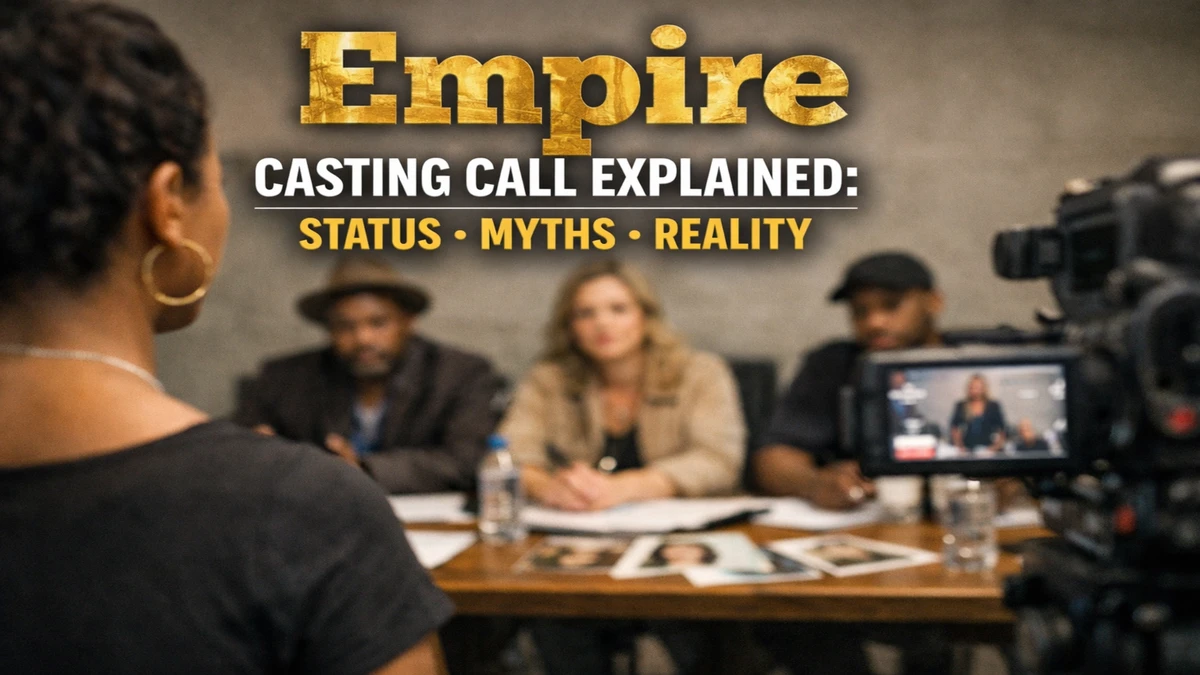
I remember the first time the phrase “Empire casting call” surged across social feeds and backstage forums, not as a quiet industry notice but as a cultural signal. For actors, musicians, and background performers, those words once meant proximity to power, to soundstages humming with hip hop ambition, and to a series that reshaped prime time television. Within the first hundred words of any search today, the reality becomes clear: there are no active casting calls for the Fox drama Empire as of February 2026. The show ended in 2020, and no new seasons are in confirmed production. Yet interest persists, fueled by rumor, nostalgia, and the entertainment industry’s habit of recycling names that still resonate.
Empire casting calls originally referred to auditions for the Fox series created by Lee Daniels and Danny Strong, a drama centered on a fictional hip hop music dynasty. At its peak, the show attracted thousands of hopefuls for principal roles, guest appearances, and background work. Even now, years after the final curtain, casting platforms still report spikes in searches tied to “Empire,” often confusing aspiring performers who encounter unrelated theater programs or dance studios using the same name.
This article examines why Empire casting calls continue to matter, how legitimate casting once worked, what exists today under the Empire label, and how performers can protect themselves while navigating opportunity in an industry built on aspiration. The story is less about a single show and more about how cultural memory lingers in the audition room.
Read: Sugar City Lautoka: History, Culture, Economy, and Identity of Fiji’s Western Capital
The Rise of Empire and the Power of Its Casting Calls
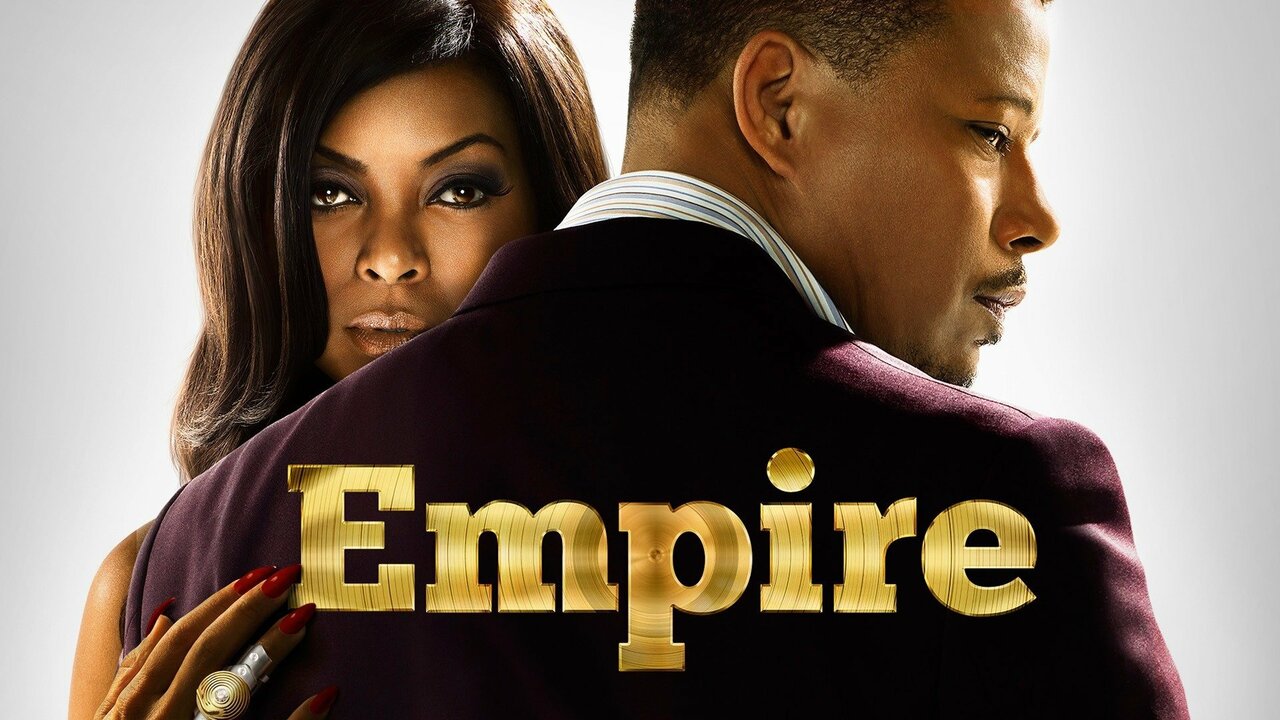

When Empire premiered on Fox in January 2015, it arrived as both entertainment and statement. The series followed the Lyon family and their hip hop conglomerate, blending melodrama with social commentary and chart-topping music. Casting calls during the early seasons reflected that ambition. Producers sought not only trained actors but musicians, dancers, and authentic voices from hip hop culture.
Casting notices circulated through established platforms such as Backstage and Actors Access, often specifying union status, age ranges, and cultural fluency. For background roles alone, thousands submitted headshots weekly during peak production years between 2015 and 2018. These calls became rites of passage for performers seeking a foothold in network television.
What distinguished Empire casting was its scale and symbolism. Landing even a day-player role carried social currency, particularly for Black actors historically underrepresented in prime time dramas. Casting directors emphasized professionalism and precision, reinforcing industry standards while offering visibility that few shows of the era could match.
Current Status: No Active Calls, Lingering Searches
As of February 2026, no confirmed casting calls exist for new seasons or revivals of Empire. The series concluded after six seasons in April 2020, following production disruptions and creative closure. Searches across Backstage, Project Casting, and IMDb Pro confirm the absence of active notices tied to the original Fox production.
Yet search interest remains steady. Casting platforms report frequent queries from performers who encounter outdated listings or misinterpret unrelated “Empire” opportunities. This persistence highlights a broader issue within digital casting ecosystems: expired calls often linger through reposts, blogs, and social media screenshots detached from context.
Industry professionals stress verification. Legitimate casting announcements always identify production companies, casting directors, and submission methods. In the case of Empire, any authentic revival would first surface through trade publications such as Deadline or Variety before reaching open calls. Until then, the absence of credible listings is definitive.

How the Original Application Process Worked
I once spoke with actors who described Empire auditions as both exhilarating and exacting. Submissions required professional headshots, concise resumes, and occasionally demo reels. Instructions were rigid. Age, union status, and availability were non-negotiable filters.
Callbacks often involved in-person auditions during early seasons, shifting toward self-tapes as production scaled. Actors performed sides provided under strict confidentiality agreements. Even background performers received call sheets outlining wardrobe expectations and on-set conduct.
The process reflected industry norms but carried added scrutiny due to the show’s visibility. Casting directors expected preparedness and authenticity. Missed instructions meant instant dismissal, a reality that reinforced discipline while demystifying the audition hierarchy for newcomers.

Role Types That Defined the Series
Empire’s casting architecture mirrored its narrative complexity. Principal and recurring roles demanded seasoned performers capable of sustaining long arcs. Guest stars and day players filled narrative gaps, often portraying industry figures, rivals, or family allies. Background extras populated concert scenes, boardrooms, and street settings, providing texture without dialogue.
Specialty talent played a distinctive role. Musicians performed original tracks, dancers energized club scenes, and choreographers shaped visual rhythm. This layered casting approach expanded access points into the production while maintaining artistic coherence.
Common Role Categories in Empire
| Role Type | Experience Required | Typical Commitment |
|---|---|---|
| Principal/Recurring | Professional acting background | Multi-episode |
| Guest Star | Moderate to extensive | 1–3 episodes |
| Day Player | Some on-camera experience | Single episode |
| Background Extra | Minimal | Daily or weekly |
| Specialty Talent | Verified skill | Scene-based |
The Self-Tape Era and Best Practices
By the later seasons, self-tapes became standard. Casting offices prioritized efficiency and geographic flexibility. Performers recorded auditions at home, adhering to strict technical guidelines. Neutral backgrounds, clean audio, and natural lighting replaced elaborate setups.
Slates remained essential. Actors stated their names, roles, and representation before performing. Scenes were concise, rarely exceeding two minutes. Editing was minimal, preserving authenticity over polish.
These practices continue across the industry today. Even unrelated Empire-branded auditions follow similar standards, underscoring the lasting influence of the show’s casting culture on contemporary expectations.
Related Opportunities Using the “Empire” Name
While the Fox series remains dormant, several organizations use “Empire” in their branding. These opportunities are legitimate but unrelated, often causing confusion among hopeful applicants.
Active Empire-Branded Opportunities in 2026
| Organization | Location | Opportunity | Dates |
|---|---|---|---|
| Empire Theatre | Australia | Junior IMPACT Program | March 9–12, 2026 |
| Empire Studios | New Zealand | Dance Crew Auditions | February 2026 |
| The Empire Entertainment | Global | Cruise and land performers | Ongoing |
Each program operates independently, with its own application criteria and artistic focus. Verification remains essential, particularly when names overlap with high-profile television properties.
Expert Perspectives on Casting Longevity
“Shows like Empire don’t end culturally when production stops,” says casting consultant Angela Rivers. “They leave a digital footprint that actors chase for years.”
Entertainment lawyer Marcus Feld adds, “Name recognition can blur boundaries. That’s where scams thrive. Verification protects both talent and producers.”
Casting director Leon Washington notes, “If Empire were revived, casting would begin quietly at the agency level. Open calls would come later, if at all.”
These insights underscore an industry reality shaped by reputation, caution, and patience.

Spin-Off Rumors and the Reality Check
Discussions around potential spin-offs, including a Cookie Lyon–centered project, surfaced intermittently after 2020. Actress Taraji P. Henson publicly acknowledged early development talks in interviews around 2024 and 2025. No pilot orders or casting notices followed.
Industry analysts caution against conflating development chatter with production reality. Many projects stall quietly, never reaching casting stages. For now, Empire remains closed, its casting legacy intact but inactive.
Avoiding Scams in a Name-Driven Market
The persistence of Empire casting searches has created fertile ground for fraud. Scammers exploit nostalgia, requesting fees for fake auditions or workshops. Legitimate casting never charges for roles.
Professionals advise cross-checking announcements across multiple platforms and confirming casting directors’ credentials. When in doubt, absence from major trade publications is itself a warning sign. – empire casting call.
Takeaways
- Empire casting calls officially ended with the series in 2020.
- No confirmed revivals or season seven productions exist as of February 2026.
- Many current “Empire” auditions are unrelated theater or studio programs.
- Legitimate casting requires no fees and clear verification.
- Self-tape standards established during Empire remain industry norms.
- Rumors precede casting announcements but rarely guarantee production.
Conclusion
I find that the enduring fascination with Empire casting calls speaks less to the possibility of new episodes and more to the show’s symbolic weight. Empire represented access, ambition, and a moment when network television mirrored contemporary music culture with uncommon confidence. Its auditions became gateways, not just to roles, but to recognition within an industry often defined by exclusion.
Years later, the absence of active casting has not diminished curiosity. Instead, it has transformed the phrase “Empire casting call” into shorthand for opportunity itself, a reminder of how cultural landmarks persist beyond their broadcast lives. For performers, the lesson is pragmatic. Opportunity follows verification, preparation, and patience, not rumor. The industry evolves, but its fundamentals remain steady.
As the entertainment landscape continues to fragment across platforms and formats, the story of Empire offers clarity. Shows end. Names linger. Casting calls come and go. What remains is the craft, the discipline, and the quiet resilience of those still waiting for the next legitimate notice to appear. empire casting call.
FAQs
Is there an active Empire casting call in 2026?
No. There are no confirmed casting calls for the Fox series Empire as of February 2026.
Did Empire end permanently?
Yes. The series concluded after six seasons in April 2020 with no renewal announced.
Are Empire spin-offs casting now?
No spin-offs are in active casting. All reported projects remain in early development stages.
Why do I still see Empire auditions online?
Many are expired listings or unrelated organizations using the “Empire” name.
How can I avoid casting scams?
Never pay fees, verify announcements through multiple reputable platforms, and confirm casting directors’ identities.