

Introduction
I remember the sound of paper brackets snapping in half under the pressure of hurried hands. For decades, wrestling tournaments were managed through binders, clipboards, and long nights of manual scoring. FloArena arrived promising something radical for a sport rooted in tradition: simplicity, speed, and free access.
Launched around 2011 by FloSports under its wrestling arm FloWrestling, FloArena digitized tournament operations at a moment when wrestling lagged behind other sports technologically. In its first hundred words of relevance, the promise was clear. It replaced paper-based systems with a cloud platform that allowed brackets, scoring, and registrations to update instantly from any device.
The impact was immediate. Coaches could upload rosters in bulk. Officials no longer ran paper bout sheets across gyms. Parents followed brackets on their phones instead of craning over bulletin boards. For youth leagues and high school tournaments operating on shoestring budgets, the fact that FloArena was free mattered as much as its functionality.
By the mid 2010s, FloArena powered everything from local youth events to postseason championships in states like Massachusetts and Connecticut. It helped wrestling feel modern without asking it to change its soul.
Then, quietly, it faded. Between 2023 and 2024, its core services were sunsetted. What remained was a viewing shell. To understand why, it helps to look closely at what FloArena built, what it enabled, and what the sport lost when it disappeared.
Read: Pinaflux Explained: Meaning, Origins, and Why the Term Is Trending Online
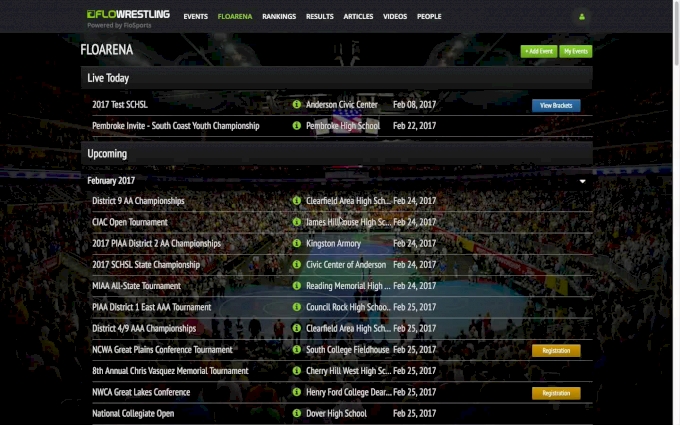


Building a Digital Arena for a Paper Sport
Wrestling tournaments are logistical puzzles. Hundreds of athletes, multiple mats, weight classes, and constant bouts require coordination under time pressure. FloArena addressed this by translating the tournament floor into software logic.
At its core, the platform offered auto-updating brackets that recalculated paths instantly after each match. Real-time scoring allowed table workers to input points that propagated across brackets without delay. Coaches accessed dedicated portals showing bout orders and athlete progress. Fans saw the same data live.
Crucially, FloArena required no specialized hardware. Any laptop, tablet, or phone with internet access worked. This mattered in rural gyms and community centers where budgets were thin and infrastructure uneven.
The system scaled. Tiered seeding supported small youth brackets and NCAA-sized fields. Officials used digital bout sheets that reduced errors and disputes. Integration with FloWrestling streams meant a match result and its video replay lived side by side.
“FloArena lowered the barrier to entry for hosting tournaments,” said wrestling historian and coach Jason Bryant in a 2016 panel discussion. “It professionalized events that used to feel improvised.”
That professionalism changed expectations across the sport.
Read: Unleash Your Creativity with Worfle: The Ultimate Writing and Brainstorming Tool
Key Features That Changed Tournament Operations
FloArena succeeded because it understood wrestling workflows rather than forcing generic sports software onto a niche community. Its feature set evolved through direct feedback from coaches and organizers.
Core Capabilities
| Feature | What It Replaced | Why It Mattered |
|---|---|---|
| Auto-updating brackets | Paper wall charts | Eliminated delays and crowding |
| Real-time scoring | Handwritten scorecards | Reduced errors and disputes |
| Online registration | Mailed forms | Increased participation |
| Bulk roster uploads | Manual entry | Saved hours for coaches |
| Live stream integration | Separate video systems | Unified viewing experience |
The online registration system alone reshaped tournament scale. Youth leagues that once capped entries due to paperwork suddenly expanded. Parents registered athletes weeks earlier. Organizers forecasted mat needs accurately.
FloArena also maintained distinct user experiences. Coaches saw actionable data. Officials focused on bout flow. Fans received simplified views optimized for mobile screens.
“From an operations standpoint, it was ahead of its time,” said former high school athletic director Mark Ellis in a 2019 interview. “And the fact that it cost nothing made it almost irresistible.”
A Free Tool With a Professional Reach
FloArena’s most radical choice was its pricing. Unlike competitors, it charged nothing for tournament management. This decision aligned with FloSports’ broader strategy of monetizing media rather than infrastructure.
The result was widespread adoption. By the late 2010s, FloArena managed events across youth, high school, collegiate, and club levels. State associations such as the MIAA and CIAC used it for postseason championships. International events partnered through organizations like World of Wrestling.
Adoption Milestones
| Year | Milestone |
|---|---|
| 2011 | Initial launch |
| 2014 | Major youth and high school adoption |
| 2016 | State postseason integrations |
| 2019 | Peak usage across U.S. events |
| 2023 | Core services sunsetted |
This reach democratized access to professional-grade tools. Small tournaments looked and felt like national events. Athletes gained exposure through live streams. Families followed matches remotely.
According to a 2018 FloWrestling internal blog post, event organizers reported significant attendance increases after switching to FloArena, citing ease of registration and real-time visibility.
The platform did not just manage tournaments. It reshaped how wrestling presented itself to the world.
Global Access and Cultural Shift
Wrestling has always been intensely local. FloArena made it quietly global. A parent in another state could watch a youth final live. Alumni tracked high school programs years after graduation.
This visibility mattered. Exposure encouraged participation. Wrestlers saw their matches archived alongside elite competitions. For young athletes, that connection to a larger ecosystem reinforced commitment.
“Streaming and live brackets changed motivation,” said sports sociologist Dr. Emily Sanderson in a 2020 study on youth sports engagement. “When participation feels visible, retention improves.”
FloArena also standardized expectations. Once a tournament offered real-time brackets, others felt pressure to match it. Paper systems began to feel outdated rather than traditional.
The shift echoed broader trends in amateur sports. Technology did not replace community. It amplified it.
The Quiet Sunset of a Beloved Platform
Between 2023 and 2024, organizers noticed something unsettling. New tournaments could no longer be created. Support slowed. Features froze. FloArena’s core management tools were effectively shut down.
FloSports never issued a detailed public explanation. Industry observers point to a convergence of factors. The platform’s underlying technology aged. Maintaining free infrastructure grew costly. FloSports’ revenue increasingly came from subscriptions and streaming rather than tools.
Strategically, FloSports pivoted. It partnered with TrackWrestling, integrating events into FloWrestling’s schedule tab. The arena.flowrestling.org site remained active but limited to viewing brackets, results, and streams.
An engineer familiar with the decision, speaking anonymously to The Mat in 2024, described it bluntly. “We had to choose between maintaining legacy systems and building media products that paid the bills.”
The choice reflected broader realities of sports technology economics.
Community Reaction and Loss of History
The shutdown hit hardest at the grassroots. Coaches and organizers lost a free staple. Some historical data vanished. Forums on Reddit and TheMat.com filled with frustration.
For many, FloArena was not just software. It was institutional memory. Years of brackets, results, and athlete histories lived there.
“There was no export warning,” wrote one longtime tournament director in a 2024 Reddit thread. “Decades of youth wrestling history just gone.”
The transition also imposed costs. Alternatives charged fees. Learning curves returned. Some small events disappeared rather than adapt.
Yet wrestling adapted, as it always has.
The Rise of Alternatives
As FloArena faded, other platforms stepped in. Each reflected a different philosophy.
Leading Replacements
| Platform | Strengths | Typical Use |
|---|---|---|
| TrackWrestling | Comprehensive, widely adopted | USA Wrestling events |
| MatBoss | Team management and stats | High school and clubs |
| Wrestling Genius Software | Simplicity and reliability | Small tournaments |
TrackWrestling emerged as the primary replacement for large events. Its paid model offered sustainability and support. MatBoss appealed to coaches focused on athlete development. Wrestling Genius Software continued serving organizers who valued minimalism.
FloWrestling itself launched a new platform in 2025. It offered advanced bracket visualization and real-time athlete tracking, free for fans but without full tournament creation. It signaled FloSports’ commitment to media-first experiences.
The ecosystem diversified rather than consolidated.
Participation, Growth, and Measurable Impact
Despite its sunset, FloArena’s legacy persists in participation metrics. Youth leagues that adopted online registration reported sustained growth even after switching platforms. Expectations it set remained.
A 2017 World of Wrestling partnership announcement cited significant attendance increases since adopting FloArena tools. State associations noted smoother postseason events capable of handling larger fields.
The lesson was not about a specific product. It was about accessibility. When administrative friction drops, participation rises.
“FloArena proved that infrastructure matters as much as coaching,” said NCAA administrator Paul Harrington in a 2022 symposium. “You cannot grow a sport if entering it feels like paperwork.”
That insight continues guiding wrestling’s digital future.
Takeaways
- FloArena digitized wrestling tournaments at a moment when the sport lagged technologically.
- Its free model democratized access to professional-grade event management.
- Real-time brackets and streaming expanded global visibility and engagement.
- Strategic shifts and maintenance costs led to its sunset between 2023 and 2024.
- Alternatives filled the gap, but none replicated its free, universal appeal.
- The platform’s influence persists in expectations and participation growth.
Conclusion
FloArena’s story is not one of failure. It is one of timing. It arrived when wrestling needed modernization and left when the economics of sports technology changed.
For more than a decade, it bridged dusty gyms and digital dashboards. It made small tournaments feel important and big tournaments feel manageable. It reminded a tradition-bound sport that efficiency need not erase identity.
Its disappearance exposed vulnerabilities in relying on free infrastructure, but it also underscored how much wrestling had evolved. The community adapted quickly because FloArena had already taught it how.
Today, as fans browse arena.flowrestling.org to follow events like the 2026 PIAA Wrestling Championships, they still benefit from a world FloArena helped build. The brackets may run on different software, but the expectation of instant access remains.
In that sense, FloArena never really left. It simply dissolved into the sport’s new normal.
FAQs
What was FloArena?
FloArena was a free, cloud-based wrestling tournament management platform developed by FloSports that handled brackets, scoring, registration, and streaming integration.
When did FloArena launch?
It launched around 2011 and saw widespread adoption throughout the 2010s.
Why did FloArena shut down?
Industry analysis points to outdated technology, high maintenance costs, and FloSports’ strategic shift toward media and subscriptions.
Can tournaments still be viewed on FloArena?
Yes. arena.flowrestling.org still allows viewing of brackets, results, and registrations, but no new tournaments can be created.
What platforms replaced FloArena?
TrackWrestling, MatBoss, and Wrestling Genius Software became leading alternatives.