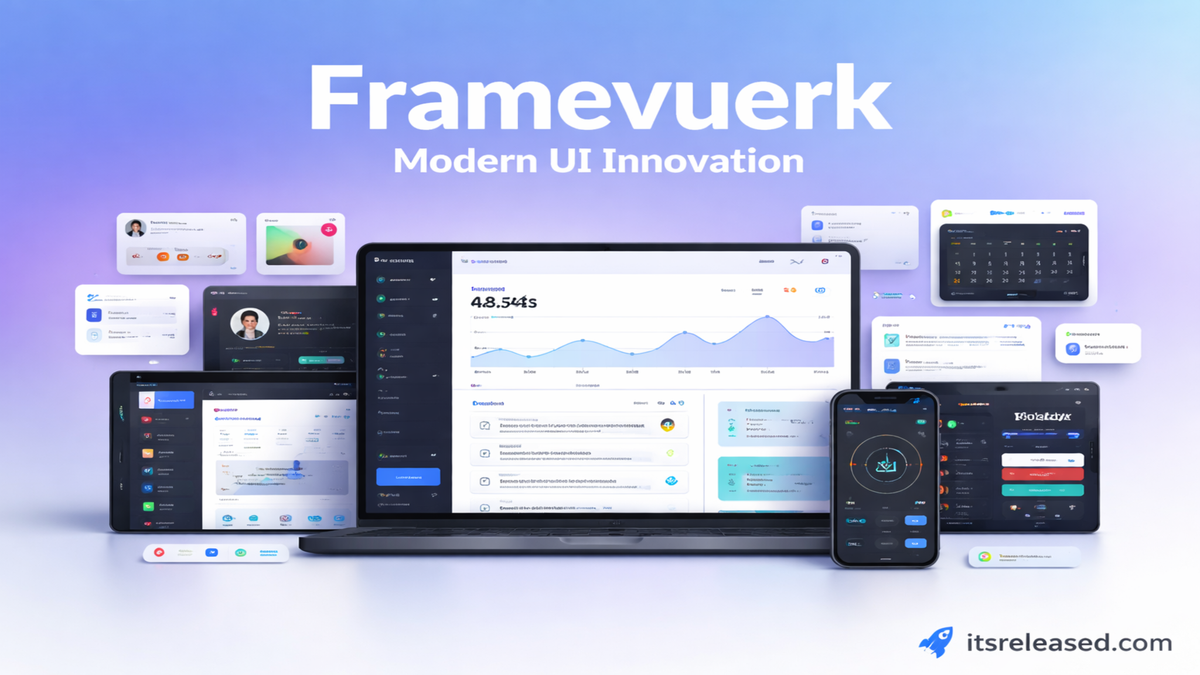
I have always been fascinated by how user interface technologies evolve, and when I explore the idea of framevuerk, I see it as a representation of next generation UI thinking. Instead of treating it as just another framework name, I approach it as a concept that combines structured development, visual consistency, performance optimization, and developer friendly architecture. In this in depth guide, I will explain framevuerk as a modern UI framework approach, discuss its architecture, design philosophy, development workflow, performance strategies, scalability, security considerations, and real world applications. This article is designed for developers, designers, startup founders, and technology learners who want to understand how a powerful UI framework can shape digital products.
What Is Framevuerk?
Framevuerk can be understood as a structured development ecosystem that allows developers to build interactive web interfaces using reusable components, reactive data systems, and modular architecture. Unlike traditional static website development, framevuerk emphasizes dynamic updates, state management, and seamless user interaction without full page reloads.
At its core, framevuerk revolves around three principles: component based design, reactive state handling, and performance conscious rendering. These pillars ensure that applications built with framevuerk are scalable, maintainable, and efficient.
Core Philosophy Behind Framevuerk
When I think about framevuerk, I see it as an approach that prioritizes clarity and structure. It avoids chaotic file organization and instead encourages logical separation of concerns. Developers work with self contained components that manage their own structure, styling, and behavior.
The philosophy includes:
- Build once, reuse everywhere
- Maintain predictable state flows
- Keep rendering efficient
- Encourage readable code patterns
- Support modular expansion
These values help teams collaborate more effectively and maintain long term code quality.
Why Modern Applications Need Framework Structure
Before structured frameworks existed, developers relied heavily on manual scripting and direct DOM manipulation. That approach worked for simple websites, but it became unsustainable for complex applications like dashboards, marketplaces, and SaaS platforms.
Framevuerk style architecture addresses this by introducing layered systems.
Problems Without Framework Structure
Applications built without structure often face:
- Repeated code duplication
- Hard to track state changes
- Slow rendering
- Difficult debugging
- Inconsistent UI components
A structured framework eliminates these inefficiencies by providing patterns and guidelines.
Architecture of Framevuerk
The architecture of framevuerk can be divided into several layers. Each layer plays a specific role in application functionality.
1. Component Layer
Components are reusable building blocks. Each component contains:
- Template or structure
- Styling definitions
- Logic and behavior
- State bindings
Instead of writing large monolithic files, developers divide the interface into smaller pieces.
2. Reactive Data Layer
This layer tracks changes in application data. When data changes, the UI updates automatically. This reactive system ensures synchronization between the visual interface and underlying logic.
3. Routing Layer
Routing manages navigation between views in a single page application. Instead of refreshing the browser, framevuerk swaps components dynamically.
4. State Management Layer
As applications grow, managing shared data becomes complex. A centralized state system ensures that different components access consistent data without conflicts.
Framevuerk Development Workflow
From my experience, structured workflows significantly reduce confusion in development teams.
Project Initialization
The process usually begins with setting up:
- Directory structure
- Dependency configuration
- Build tools
- Development server
A consistent structure helps new team members understand the project quickly.
Component Creation
Developers define components by combining structure, logic, and style in one organized file or module. This promotes cohesion and reduces fragmentation.
State Binding
Reactive bindings connect data variables to visual elements. When data changes, the framework re-renders only necessary portions of the interface.
Deployment
Applications built using framevuerk are compiled and optimized for production environments. The build system removes unnecessary code and compresses assets.
Comparison Table: Traditional vs Framevuerk Approach
| Feature | Traditional Web Approach | Framevuerk Approach |
|---|---|---|
| DOM Updates | Manual manipulation | Automatic reactive updates |
| Code Organization | Often scattered | Modular components |
| State Handling | Global variables | Centralized state system |
| Performance | Depends on manual tuning | Optimized rendering cycle |
| Scalability | Difficult at scale | Designed for large apps |
This comparison shows how structured frameworks simplify development at scale.
Key Features of Framevuerk
Framevuerk includes a range of powerful features that improve developer productivity and user experience.
Reactive Rendering Engine
The reactive engine tracks dependencies between data and UI elements. It ensures only affected components re-render instead of the entire page.
Virtual DOM Strategy
A virtual representation of the DOM helps reduce direct browser manipulation. This improves performance and responsiveness.
Component Communication System
Components often need to share information. Framevuerk supports:
- Parent to child data passing
- Child to parent event emission
- Global state access
This system keeps communication structured and predictable.
Plugin and Extension Support
Developers can extend the framework by adding plugins for:
- Form validation
- Internationalization
- Authentication
- Animation libraries
Performance Optimization Techniques
Performance is critical for user satisfaction. Framevuerk integrates multiple optimization strategies.
Lazy Loading
Instead of loading all components at once, the framework loads only required modules when needed. This reduces initial load time.
Code Splitting
Large applications are divided into smaller bundles. Users download only what they interact with.
Memoization
Reusable computed values are cached to prevent repeated calculations.
Framevuerk Folder Structure Example
A clean folder structure promotes maintainability.
| Folder | Purpose |
|---|---|
| components | Reusable UI modules |
| views | Page level components |
| store | Centralized state management |
| router | Navigation configuration |
| assets | Images and static files |
| services | API and business logic |
This structure ensures clear separation of responsibilities.
Security Considerations
Security must be embedded into development practices.
Input Validation
Always validate user input to prevent malicious injection attacks.
Secure API Communication
Use encrypted communication protocols for data exchange.
Authentication Guarding
Restrict access to sensitive routes using authorization checks.
Real World Applications of Framevuerk
Framevuerk style frameworks are suitable for multiple domains.
SaaS Platforms
Subscription based services benefit from modular dashboards and reactive UI.
E Commerce Applications
Dynamic product listings and cart systems rely on real time state updates.
Educational Portals
Interactive lessons and progress tracking require responsive components.
Administrative Dashboards
Data heavy interfaces benefit from optimized rendering cycles.
Advantages of Using Framevuerk
After exploring structured UI frameworks deeply, I see several benefits.
- Improved scalability
- Cleaner codebase
- Faster development cycles
- Better team collaboration
- Enhanced user experience
These advantages contribute to long term sustainability.
Challenges Developers May Face
No framework is perfect. Some common challenges include:
Learning Curve
Beginners may struggle with reactive concepts and component architecture.
Over Engineering
Small projects may not need complex frameworks.
Performance Misconfiguration
Improper state handling can reduce efficiency.
Understanding best practices helps overcome these obstacles.
Future Evolution of Framevuerk
Technology continues to evolve rapidly. I believe future versions of structured UI frameworks will focus on:
- Improved server side rendering
- Edge deployment optimization
- Better developer tooling
- Simplified state logic
- AI assisted debugging
As hardware improves and user expectations grow, frameworks must adapt accordingly.
Best Practices for Using Framevuerk
Based on practical experience, I recommend the following strategies:
Keep Components Small
Smaller components are easier to test and reuse.
Maintain Clean State Logic
Avoid mixing unrelated state variables in one module.
Optimize Rendering Conditions
Use conditional rendering carefully to prevent unnecessary updates.
Document Code Thoroughly
Clear documentation ensures long term maintainability.
Final Thoughts
When I analyze framevuerk as a modern UI development concept, I see it as a powerful foundation for building scalable digital applications. It brings structure to complexity, reduces repetitive work, and enhances performance through intelligent rendering systems. Developers gain clarity, designers benefit from consistent components, and users experience smooth interactions. While learning structured frameworks requires patience and practice, the long term benefits far outweigh the initial effort. Framevuerk style architecture represents the future of clean, maintainable, and high performance web application development.
Read: Text-Generation-WebUI Complete Guide for Beginners and Developers
FAQs
1. What is framevuerk used for?
Framevuerk is used for building scalable and interactive web applications using structured component architecture.
2. Is framevuerk suitable for beginners?
Yes, but beginners should first understand basic JavaScript and web development principles.
3. How does framevuerk improve performance?
It uses reactive rendering, virtual DOM strategies, and code splitting to optimize updates.
4. Can framevuerk be used for large enterprise applications?
Yes, its modular design and centralized state management support enterprise level scalability.
5. Does framevuerk support mobile responsive design?
Yes, it works seamlessly with responsive styling techniques to support multiple device sizes.