
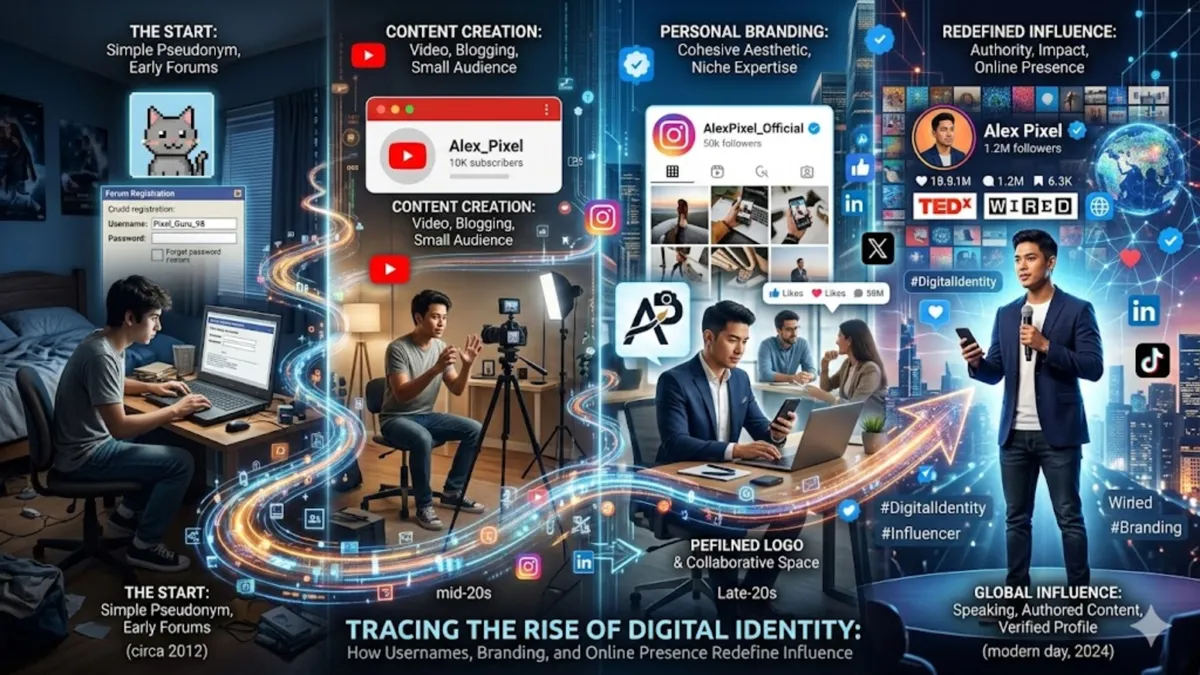
I begin with what most readers are searching for: “jdbratcherp” is not a widely recognized public institution, company, or historical concept. Instead, it represents a modern phenomenon a unique digital identity, likely a username, handle, or personal brand that exists within the sprawling architecture of the internet. Understanding “jdbratcherp” requires stepping into the world of online identity, where names are crafted, distributed, and imbued with meaning far beyond their original intent.
In the first moments of encountering such a term, the instinct is to decode it. Is it a person, a brand, a pseudonym, or a fragment of code? Increasingly, the answer is all of the above. Digital identities like “jdbratcherp” operate as anchors in an environment where individuals curate their presence across social media, forums, gaming platforms, and professional networks. They are both identifiers and narratives.
Over the past two decades, the internet has transformed how identity is constructed. What once required formal recognition such as a published name or institutional affiliation can now emerge organically through consistent usage of a handle. A string of characters can become a reputation, a business, or even a community.
The story of “jdbratcherp” is therefore not about a single entity. It is about the systems that allow such identities to exist. It reflects a broader cultural shift toward decentralization, personalization, and digital permanence.
The Rise of Digital Identity
The concept of digital identity began taking shape in the early days of the internet, particularly in the 1990s with the rise of chat rooms, bulletin board systems, and early email platforms. Users needed identifiers, and usernames became the simplest solution.
Sherry Turkle, a sociologist at MIT, wrote, “Online identities allow people to explore multiple aspects of the self” (Turkle, 1995). This insight remains relevant today. A name like “jdbratcherp” can function as both a mask and a mirror, concealing real-world identity while reflecting personal interests or affiliations.
As platforms expanded, the importance of a consistent username grew. Early internet culture valued anonymity, but modern ecosystems reward recognizability. Influencers, developers, and entrepreneurs often maintain the same handle across platforms to build trust and visibility.
This evolution marks a shift from identity as static to identity as dynamic. Digital names are no longer just labels. They are assets, capable of accumulating value through engagement, content, and community.
READ: Voozon Platform Guide: Features, Pricing, SEO & Collaboration Explained
Username Culture and Personal Branding
The emergence of personal branding has elevated usernames into strategic tools. A handle like “jdbratcherp” may appear arbitrary, yet it can become meaningful through repetition and association.
Marketing expert Philip Kotler notes, “Branding is about creating differences that distinguish an offering from others” (Kotler & Keller, 2016). In digital spaces, the username itself becomes that differentiator.
Platforms such as Twitter, Instagram, and GitHub have reinforced this trend. A recognizable handle can serve as a gateway to content, expertise, and influence. Over time, audiences associate the name with specific values or skills.
The structure of “jdbratcherp” suggests a personal origin perhaps initials combined with a surname and an additional identifier. This pattern is common in professional and semi-professional contexts, where users balance individuality with memorability.
In this way, usernames evolve into micro-brands. They carry reputational weight, shaping how others perceive and interact with the individual behind them.
The Architecture of Online Identity Systems
Digital identity is supported by complex systems that manage authentication, visibility, and data. Behind every username lies a network of databases, protocols, and security measures.
Table: Components of Digital Identity Systems
| Component | Function | Example Use Case |
|---|---|---|
| Username | Unique identifier | Social media handle |
| Password/Auth | Security verification | Login systems |
| Metadata | Associated user information | Profile details |
| Platform Database | Storage and retrieval | User account systems |
| APIs | Data sharing across platforms | Cross-platform integration |
These systems ensure that each identity remains distinct while allowing interaction across networks. The persistence of a name like “jdbratcherp” depends on these underlying structures.
Cybersecurity expert Bruce Schneier emphasizes, “Identity systems are central to trust in digital environments” (Schneier, 2015). Without reliable systems, usernames would lose their credibility.
The technical infrastructure thus reinforces the cultural significance of digital identity, creating a stable foundation for evolving online personas.
Anonymity, Authenticity, and Trust
One of the defining tensions in digital identity is the balance between anonymity and authenticity. A username can obscure real-world identity while still conveying credibility.
Research from the Pew Research Center indicates that a significant portion of internet users value anonymity for privacy and freedom of expression (Pew Research Center, 2014). At the same time, platforms increasingly encourage real-name policies to enhance trust.
A name like “jdbratcherp” occupies a middle ground. It may hint at a real identity while maintaining a degree of separation. This hybrid approach is common in professional online spaces.
Trust is built through consistency rather than transparency alone. Regular activity, quality content, and engagement contribute to credibility. Over time, the username itself becomes a trusted entity.
This dynamic highlights a key insight: authenticity online is not solely about revealing one’s real name. It is about demonstrating reliability and integrity through actions.
The Economics of Digital Identity
Digital identities have economic value. Influencers monetize their handles through sponsorships, advertising, and product sales. Developers build reputations that translate into job opportunities.
Table: Economic Value of Digital Identity
| Category | Revenue Source | Example Outcome |
|---|---|---|
| Influencers | Sponsorships, ads | Brand partnerships |
| Developers | Freelancing, employment | Job offers via GitHub |
| Entrepreneurs | Product sales | E-commerce success |
| Content Creators | Subscriptions, donations | Patreon or YouTube income |
The monetization of identity reflects a broader shift toward the creator economy. A username becomes a gateway to income streams.
Economist Erik Brynjolfsson has observed, “Digital platforms enable individuals to capture value from their ideas and identity at unprecedented scale” (Brynjolfsson & McAfee, 2014).
For emerging identities like “jdbratcherp,” the potential for economic value depends on visibility, engagement, and niche relevance.
The Persistence and Permanence of Online Names
Unlike physical identities, digital identities can persist indefinitely. Once established, a username may remain searchable for years, even decades.
This permanence raises important questions about privacy and accountability. Actions associated with a username can have long-term consequences.
Legal scholar Daniel Solove argues, “The internet’s memory creates a new kind of permanence that challenges traditional notions of forgetting” (Solove, 2007). This permanence applies to all digital identities, regardless of scale.
For users, this means that building a digital identity requires foresight. Choices made today can shape future opportunities and perceptions.
The endurance of names like “jdbratcherp” reflects the broader permanence of digital culture, where past and present coexist in searchable archives.
The Globalization of Identity
Digital identities are inherently global. A username created in one country can be recognized worldwide. This global reach expands opportunities but also introduces complexity.
Cultural differences influence how names are interpreted. A handle that resonates in one context may carry different connotations elsewhere.
The globalization of identity also increases competition. Millions of users vie for attention, making distinctiveness more valuable.
Yet it also fosters connection. Communities form around shared interests rather than geographic proximity. A name like “jdbratcherp” can become a node in a global network.
This interconnectedness defines the modern internet, where identity transcends borders and traditional boundaries.
Takeaways
- “jdbratcherp” represents a modern digital identity shaped by online culture and systems.
- Usernames have evolved into personal brands with social and economic value.
- Digital identity systems rely on complex technical infrastructure for stability and trust.
- The balance between anonymity and authenticity defines online credibility.
- Digital identities can generate income through the creator economy.
- The permanence of online names requires careful management and awareness.
Conclusion
I see “jdbratcherp” not as a mystery to be solved but as a lens through which to understand the digital age. It captures the essence of how identity is constructed, maintained, and valued in a world where presence is increasingly virtual.
The evolution of usernames into meaningful entities reflects a broader transformation. Identity is no longer confined to physical spaces or official documents. It exists in networks, interactions, and shared experiences.
As technology continues to advance, the significance of digital identity will only grow. Names like “jdbratcherp” will continue to emerge, each carrying its own story, shaped by the systems and communities that surround it.
In this landscape, identity is both a personal creation and a collective recognition. It is shaped by intention but defined by interaction. And in that interplay lies the future of how we understand ourselves online.
FAQs
What is “jdbratcherp”?
It is most likely a unique digital username or online identity used across platforms.
Why are usernames important today?
They serve as identifiers, brands, and gateways to online presence and reputation.
Can a username become a brand?
Yes, consistent use and audience engagement can turn a username into a recognizable personal or professional brand.
Is it better to use real names online?
It depends on goals. Some prefer anonymity, while others use real names to build trust and credibility.
Do digital identities have economic value?
Yes, they can generate income through content creation, partnerships, and professional opportunities.