
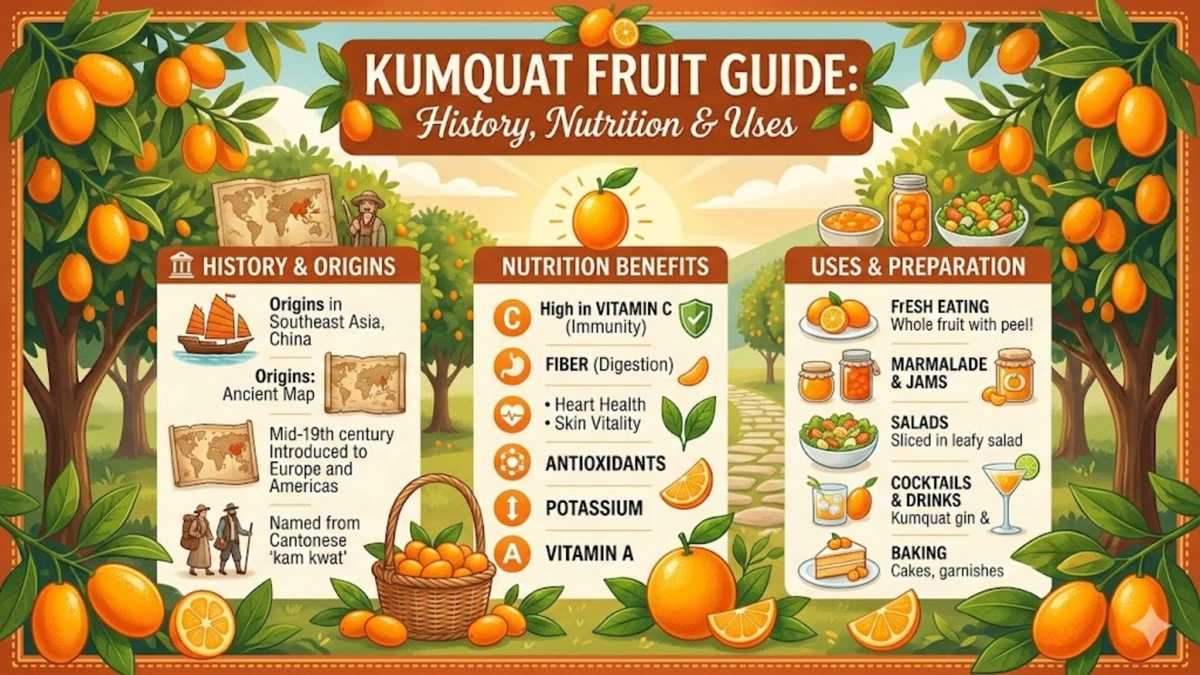
If you are searching for information about kumquats, the essentials are straightforward. A kumquat is a small citrus fruit that can be eaten whole, peel and all. Unlike most citrus, its thin skin is sweet while the interior pulp is tart, creating a distinctive flavor balance in a single bite. Native to southern China and cultivated for centuries across Asia, kumquats are now grown in warm regions worldwide, including parts of the United States.
I first tasted a kumquat at a winter market, where its bright orange color stood out among apples and pears. The vendor told me not to peel it. I bit in cautiously and found the sweetness of the rind giving way to a lively tartness. The experience felt both surprising and refreshing. That contrast defines the fruit and explains its steady rise in popularity among chefs and home cooks.
Beyond taste, kumquats are valued for their nutritional density, ornamental beauty and cultural symbolism. Their name derives from the Cantonese words for “golden orange,” reflecting both appearance and prosperity in traditional lore. Today, kumquats bridge culinary traditions and modern wellness trends, offering a vivid example of how small ingredients can carry large histories.
Botanical Background and Origins
Kumquats belong to the citrus family Rutaceae and grow on small evergreen trees or shrubs that typically reach between 8 and 12 feet tall. The trees feature glossy, dark green leaves and fragrant white blossoms. The fruit measures roughly 1 to 2 inches in length, oval or round depending on variety, and ripens to a vibrant orange-yellow hue.
Historical records trace kumquat cultivation in China back to at least the 12th century. The fruit spread throughout East and Southeast Asia, including Japan and Taiwan, where it became integrated into local cuisine and horticulture. In the mid-19th century, Scottish botanist Robert Fortune introduced kumquats to Europe. From there, they traveled to North America, where they adapted well to subtropical climates in California and Florida.
One distinctive agricultural trait sets kumquats apart from many citrus relatives: relative cold tolerance. While they still require abundant sunlight and well-drained soil, kumquat trees can withstand cooler temperatures better than oranges or lemons. This resilience has broadened their cultivation range and increased their appeal to home gardeners.
Read: What is E622? Understanding the Role, Safety, and Science Behind a Common Food Additive
Varieties and Characteristics
Though often perceived as uniform, kumquats exist in several recognized varieties. Each offers subtle differences in size, sweetness and texture.
| Variety | Shape | Flavor Profile | Common Use |
|---|---|---|---|
| Nagami | Oval | Tart flesh, sweet peel | Fresh eating, preserves |
| Marumi | Round | Slightly sweeter | Fresh snacks |
| Meiwa | Round | Sweet flesh and peel | Direct consumption |
| Nordmann Seedless | Oval | Balanced, fewer seeds | Culinary versatility |
Nagami is the most widely cultivated variety in the United States and is known for its pronounced tartness. Meiwa, often sweeter, appeals to those who prefer a milder bite. Marumi offers a middle ground.
These distinctions matter in culinary contexts. Chefs may select sweeter varieties for raw preparations and tarter types for marmalades or chutneys. Gardeners choose based on climate adaptability and taste preference.
Nutritional Profile
Kumquats pack notable nutrition into their small size. A 100-gram serving provides significant vitamin C, dietary fiber and modest amounts of potassium. Their edible peel contains essential oils and antioxidants concentrated in the skin.
| Nutrient | Approximate Amount per 100g | Role in Health |
|---|---|---|
| Vitamin C | About 49 mg | Immune support, antioxidant |
| Fiber | About 6.5 g | Digestive health |
| Potassium | About 186 mg | Fluid balance |
| Water | Roughly 80% | Hydration |
The fiber content contributes to digestive regularity and satiety. Vitamin C supports immune function and collagen formation. The antioxidants present in both peel and pulp may help reduce oxidative stress.
Dietitian Jane Montgomery notes that kumquats provide “a rare combination of citrus brightness and meaningful fiber in a compact serving.” Their low calorie count and high water content make them compatible with balanced dietary patterns.
Culinary Applications
The most distinctive culinary feature of kumquats is that they are eaten whole. The peel delivers sweetness, while the interior provides tart contrast. This layered flavor profile lends itself to diverse uses.
Fresh kumquats can be sliced into salads, adding color and acidity. They pair well with leafy greens, goat cheese and toasted nuts. In savory dishes, they complement roasted meats and seafood, providing brightness without overwhelming other flavors.
Preserving is another traditional use. Kumquat marmalade captures both sweetness and bitterness, spreading easily over bread or accompanying cheese. Candied kumquats, simmered in sugar syrup, become glossy garnishes for desserts or cocktails.
In beverages, kumquats add aromatic complexity. Bartenders infuse them into syrups or muddle them into sparkling drinks. Home cooks use them in teas or sparkling water for subtle citrus flavor.
Food historian Ellen Clarke observes that kumquats “bridge sweet and savory kitchens, adapting as readily to pastries as to main courses.” Their small size makes them visually appealing in plated presentations.
Cultural Significance
In Chinese culture, kumquats symbolize prosperity and good fortune. Their bright orange color and name, meaning “golden orange,” reinforce associations with wealth and abundance. During Lunar New Year celebrations, kumquat trees often decorate homes and public spaces.
The fruit’s ornamental value also contributes to its cultural presence. Compact trees with glossy leaves and vivid fruit are grown in containers or as decorative shrubs. In some traditions, kumquats appear in bonsai arrangements.
In Western contexts, kumquats have gained traction through culinary exploration. Farmers markets and specialty grocers increasingly feature them during winter months, when their peak season brings welcome color to colder climates.
Horticulturist Alan Green explains that kumquats offer “an approachable introduction to citrus cultivation for home gardeners,” combining beauty with practicality.
Growing Kumquats at Home
For gardeners, kumquats present an attractive option. Trees require full sun and well-drained soil. They can be grown in ground in warm climates or in containers in cooler regions, brought indoors during frost.
Pruning helps maintain shape and encourages fruit production. Trees are generally self-fertile, meaning a single plant can bear fruit without cross-pollination. Fruiting typically occurs in late fall through winter.
Container cultivation has grown in popularity, especially in urban environments. The tree’s manageable size makes it suitable for patios or balconies. With proper care, homegrown kumquats can yield abundant harvests.
Growing citrus at home carries both culinary and aesthetic rewards. The fragrance of blossoms and the visual contrast of green leaves and orange fruit add sensory appeal to gardens.
Expert Perspectives
Dr. Angela Carter, a nutrition researcher, emphasizes that kumquats “illustrate how whole-fruit consumption maximizes nutrient intake, especially when the peel is edible.” Her perspective highlights the advantage of consuming skin and pulp together.
Chef Marcus Lee values kumquats for balance. “Their sweetness from the rind offsets acidity in a way that no other citrus quite replicates,” he says.
Agricultural extension specialist Rachel Thompson notes that kumquats’ cold tolerance expands possibilities for gardeners. “They perform better in marginal climates than many citrus varieties,” she says.
These insights underscore kumquats’ appeal across disciplines, from nutrition to horticulture.
Takeaways
- Kumquats are small citrus fruits eaten whole, combining sweet peel and tart pulp.
- Originating in southern China, they spread globally through trade and horticulture.
- Varieties such as Nagami and Meiwa differ in sweetness and shape.
- Nutritionally, they provide vitamin C, fiber and antioxidants.
- Culinary uses range from fresh salads to marmalades and beverages.
- Culturally, kumquats symbolize prosperity in East Asian traditions.
Conclusion
Kumquats may be diminutive, but their story spans continents and centuries. They offer a distinctive taste experience that blends sweetness and tartness in a single bite. Their nutritional benefits reinforce their culinary value, while their cultural symbolism deepens their significance.
I see kumquats as reminders that size does not determine impact. In gardens, kitchens and cultural rituals, they hold steady presence. Their adaptability to different climates and cuisines suggests continued relevance.
Whether eaten fresh, preserved or grown at home, kumquats provide a vivid example of how food connects agriculture, nutrition and tradition. As seasonal markets display their bright color each winter, the fruit continues to invite curiosity and appreciation.
FAQs
What is a kumquat?
A kumquat is a small citrus fruit eaten whole, with sweet edible peel and tart flesh.
Are kumquats healthy?
Yes. They provide vitamin C, dietary fiber and antioxidants in a low-calorie serving.
When are kumquats in season?
They are typically in season from late fall through winter.
Can kumquats be grown in containers?
Yes. They adapt well to container gardening with sufficient sunlight and drainage.
How do kumquats differ from oranges?
Unlike oranges, kumquats are eaten whole and have sweet skin with tart pulp.