
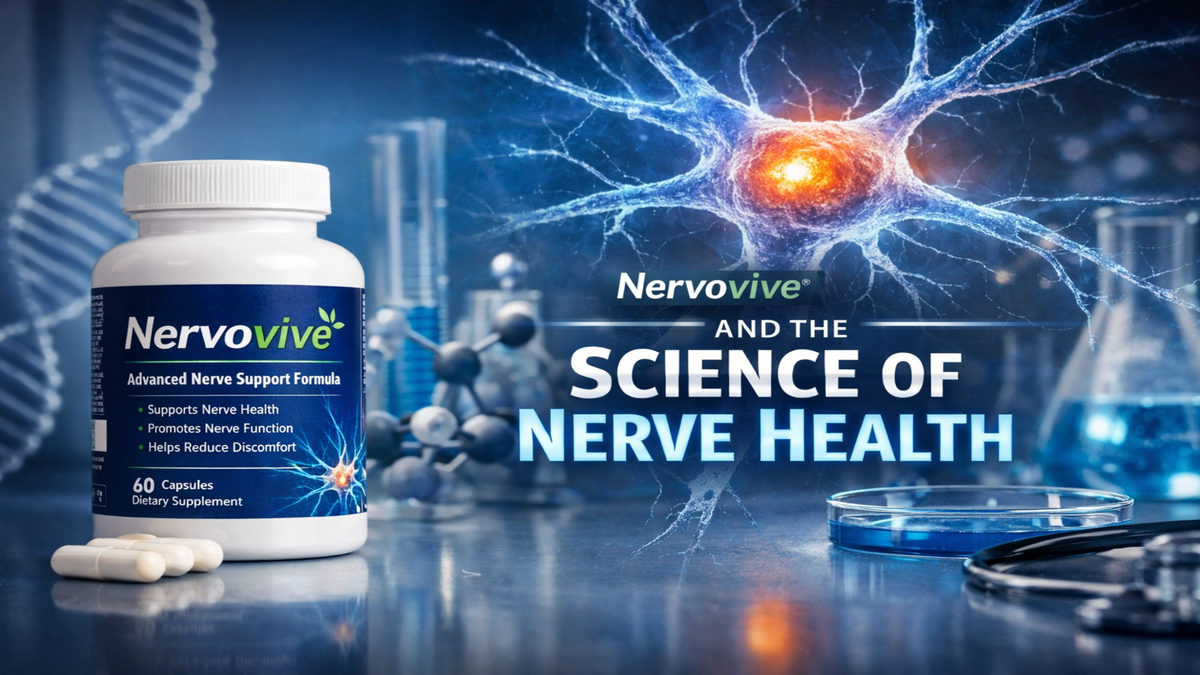
Nervovive is marketed as a dietary supplement designed to support nerve health and alleviate symptoms associated with neuropathy, including tingling, burning sensations, numbness, and chronic nerve pain. For people searching online about Nervovive, the core questions are usually straightforward: what it contains, whether it works, and how it fits into the broader landscape of treatments for nerve damage. Neuropathy affects millions worldwide, particularly individuals with diabetes, chemotherapy exposure, or certain autoimmune conditions, and the promise of a supplement offering relief has attracted considerable attention.
Digital advertisements often present Nervovive as a natural formula built around vitamins, herbal extracts, and compounds believed to protect nerve tissue. The supplement typically highlights ingredients such as alpha-lipoic acid, B vitamins, passionflower extract, and prickly pear, all of which have been investigated in varying degrees for potential neurological benefits. Yet the scientific support behind these ingredients differs widely, ranging from well-established nutritional roles to early-stage or inconclusive evidence.
Peripheral neuropathy itself is not a single disease but a symptom cluster resulting from damage to the peripheral nervous system. According to the National Institute of Neurological Disorders and Stroke, more than 20 million people in the United States alone may suffer from some form of neuropathy. Causes range from diabetes and infections to genetic disorders and exposure to toxins.
Supplements like Nervovive sit at the intersection of medicine, consumer health, and digital marketing. While some ingredients appear in legitimate clinical research, the way they are packaged and promoted often raises questions about effectiveness, safety, and regulatory oversight. Understanding Nervovive therefore requires not only examining the product itself but also exploring the broader scientific and regulatory landscape of nerve-health supplements.
The Growing Burden of Peripheral Neuropathy
Peripheral neuropathy describes damage to nerves outside the brain and spinal cord. These nerves carry sensory signals such as touch and temperature and also control muscle movements. When they malfunction, individuals may experience symptoms including numbness, burning pain, muscle weakness, and sensitivity to touch.
The condition has many possible causes. Diabetes is the most common worldwide. According to the International Diabetes Federation, nearly half of long-term diabetes patients develop some form of nerve damage during their lifetime. Chemotherapy drugs, alcohol misuse, autoimmune diseases, and vitamin deficiencies also contribute to neuropathy cases.
Neurologists classify neuropathy into several categories depending on which nerves are affected:
| Type of Neuropathy | Affected Nerves | Common Symptoms |
|---|---|---|
| Sensory neuropathy | Sensory nerves | Numbness, tingling, burning pain |
| Motor neuropathy | Motor nerves | Muscle weakness, cramps |
| Autonomic neuropathy | Involuntary body functions | Digestive issues, blood pressure changes |
| Mixed neuropathy | Multiple nerve types | Combination of symptoms |
Treatment typically focuses on managing the underlying cause and reducing symptoms. Medications such as gabapentin or duloxetine may help control nerve pain. However, many patients search for additional solutions, including dietary supplements.
Dr. Eva Feldman, a neurologist at the University of Michigan, notes that neuropathy management can be complex. “There is rarely a single therapy that reverses nerve damage,” she explains. “Most strategies aim to slow progression and manage symptoms” (Feldman et al., 2019).
This therapeutic gap has created a large market for supplements claiming to support nerve health.
What Is Nervovive?
Nervovive is typically sold online as a nutritional supplement intended to promote nerve function and reduce neuropathy discomfort. The product is usually distributed through e-commerce websites and digital marketing campaigns rather than traditional pharmacy channels.
While the precise formula can vary depending on the distributor, the supplement commonly lists several key ingredients associated with nerve health research:
| Ingredient | Proposed Role in Nerve Health | Research Status |
|---|---|---|
| Alpha-lipoic acid | Antioxidant that may improve nerve blood flow | Moderate clinical evidence |
| Vitamin B1 (Thiamine) | Supports nerve metabolism | Well established |
| Vitamin B6 | Essential for neurotransmitter synthesis | Essential nutrient |
| Vitamin B12 | Important for nerve sheath integrity | Strong evidence in deficiency |
| Passionflower extract | Traditionally used for calming effects | Limited clinical evidence |
| Prickly pear extract | Antioxidant and anti-inflammatory properties | Preliminary research |
The supplement’s marketing often emphasizes its “natural formula,” highlighting botanical ingredients alongside vitamins. However, nutrition experts caution that “natural” does not necessarily mean clinically effective.
According to the U.S. Food and Drug Administration, dietary supplements are regulated differently from prescription medications. Manufacturers are responsible for ensuring product safety, but supplements generally do not require pre-market approval demonstrating effectiveness (U.S. FDA, 2022).
As a result, products like Nervovive can be marketed with general wellness claims without undergoing the same clinical testing as pharmaceutical drugs.
Alpha-Lipoic Acid and the Science of Nerve Protection
Among the ingredients frequently highlighted in nerve-health supplements, alpha-lipoic acid (ALA) has received the most scientific attention. ALA is a naturally occurring antioxidant involved in cellular energy metabolism.
Several clinical trials have examined whether ALA may reduce symptoms of diabetic neuropathy. Some studies have reported improvements in pain, burning sensations, and numbness when patients take oral or intravenous ALA supplements.
A widely cited clinical study published in Diabetes Care found that ALA improved neuropathy symptoms in patients after several weeks of treatment. Researchers concluded that the antioxidant appeared to reduce oxidative stress linked to nerve damage (Ziegler et al., 2006).
However, results across studies remain mixed. While some patients experience symptom relief, others show little improvement.
Dr. Solomon Tesfaye, a neuropathy specialist at the University of Sheffield, explains the nuance: “Alpha-lipoic acid shows promise, particularly in diabetic neuropathy, but it is not a cure. It may be helpful as part of a broader treatment plan” (Tesfaye et al., 2011).
For supplements like Nervovive, the presence of ALA may lend scientific credibility. Yet dosage, formulation, and individual health conditions all influence whether the compound produces measurable benefits.
The Role of B Vitamins in Nerve Health
B vitamins are essential nutrients that play a critical role in nerve function. Deficiencies in certain B vitamins, particularly vitamin B12, can lead directly to nerve damage and neuropathy symptoms.
Vitamin B12 helps maintain the protective myelin sheath surrounding nerve fibers. When B12 levels fall too low, nerves can deteriorate, leading to numbness, balance problems, and cognitive difficulties.
Research has long established the connection between B12 deficiency and neuropathy. A review published in Neurology noted that B12 deficiency is a reversible cause of nerve damage if identified early and treated appropriately (Stabler, 2013).
Vitamin B1 and B6 also support nerve metabolism and neurotransmitter production. Because of these roles, many nerve-health supplements combine several B vitamins in one formula.
However, experts caution against assuming that supplementation benefits everyone. Individuals who already obtain adequate vitamins through diet may not experience noticeable improvements.
“Supplementation is most helpful when a deficiency exists,” explains Dr. Anne-Marie Wills, a neurologist at Massachusetts General Hospital. “In otherwise healthy individuals, additional vitamins may not change nerve function significantly.”
This distinction is important when evaluating products marketed for neuropathy relief.
Herbal Ingredients and Traditional Medicine
In addition to vitamins and antioxidants, Nervovive formulas often include plant extracts. Two commonly cited ingredients are passionflower and prickly pear cactus.
Passionflower has been used in traditional herbal medicine for centuries, primarily for anxiety and sleep support. Some early research suggests it may influence neurotransmitter systems associated with relaxation.
Prickly pear cactus, native to Mexico and the American Southwest, contains antioxidants and compounds believed to reduce inflammation. In laboratory studies, extracts have shown potential neuroprotective effects.
However, clinical evidence supporting these herbs for neuropathy remains limited.
Dr. Heather Zwickey, a researcher in integrative medicine, notes that botanical supplements often enter the market before extensive clinical testing occurs. “Many plant compounds have biological activity, but translating that into reliable medical treatment requires rigorous trials,” she says.
While herbal ingredients may contribute beneficial nutrients or antioxidants, their direct impact on nerve regeneration remains uncertain.
Regulation and the Supplement Industry
The global dietary supplement market has expanded dramatically over the past two decades. According to market research firm Grand View Research, the industry surpassed $150 billion globally in 2021, fueled by consumer interest in wellness products and preventative health.
In the United States, supplements fall under the Dietary Supplement Health and Education Act of 1994. This law classifies supplements as a category of food rather than pharmaceuticals.
Key regulatory differences include:
- Supplements do not require FDA approval before being sold
- Manufacturers are responsible for product safety
- Companies cannot claim to treat or cure diseases without evidence
Instead, products may use “structure-function claims,” such as supporting nerve health or promoting wellness.
Public health experts argue that this regulatory framework allows innovation but also creates potential risks.
Dr. Pieter Cohen, an associate professor at Harvard Medical School who studies supplement safety, warns that consumers should evaluate health claims carefully. “The marketing language around supplements can sometimes exaggerate the available scientific evidence,” he notes (Cohen, 2014).
For products like Nervovive, understanding the difference between marketing claims and clinical evidence is essential.
Consumer Demand and Digital Marketing
One reason supplements like Nervovive have gained popularity is the power of online marketing. Social media advertising, affiliate websites, and video testimonials often promote these products to audiences searching for relief from chronic pain.
Digital marketing strategies frequently emphasize personal stories and before-and-after narratives. These accounts can be compelling, particularly for individuals who have struggled with neuropathy for years.
Yet medical researchers caution that anecdotal evidence does not replace controlled scientific studies.
Professor Mark Griffiths, a behavioral researcher who studies online marketing in health products, explains that digital environments can amplify persuasive messaging. “Consumers often encounter repeated claims across multiple websites, creating the impression of widespread credibility,” he says.
This phenomenon underscores the importance of independent medical guidance when evaluating health supplements.
Key Takeaways
- Nervovive is marketed as a dietary supplement designed to support nerve health and relieve neuropathy symptoms.
- Peripheral neuropathy affects millions worldwide and has multiple causes, including diabetes and vitamin deficiencies.
- Some ingredients, such as alpha-lipoic acid and vitamin B12, have scientific evidence supporting roles in nerve function.
- Herbal components commonly included in supplements have more limited clinical research.
- Dietary supplements are regulated differently from prescription drugs and do not require proof of effectiveness before sale.
- Consumers should evaluate supplement claims carefully and consult healthcare professionals for neuropathy treatment.
Conclusion
Nervovive represents a broader trend in modern health culture: the growing demand for natural supplements addressing chronic conditions that conventional medicine often struggles to fully resolve. For individuals dealing with neuropathy, the appeal of a simple capsule promising relief is understandable.
Yet the science behind nerve health remains complex. While certain nutrients and antioxidants have demonstrated potential benefits, the effectiveness of any supplement depends on many factors, including dosage, underlying medical conditions, and overall treatment strategy.
Clinical research continues to explore promising compounds such as alpha-lipoic acid and B vitamins. At the same time, neurologists emphasize that comprehensive care remains the most effective approach to neuropathy. This often includes managing underlying diseases, maintaining healthy blood sugar levels, engaging in physical therapy, and addressing nutritional deficiencies.
Supplements like Nervovive may play a supportive role for some individuals, particularly when they provide nutrients lacking in the diet. But they should not replace evidence-based medical treatment.
For anyone experiencing persistent nerve pain or numbness, the most important step remains consultation with a qualified healthcare professional. As research evolves, the future of neuropathy treatment will likely combine advances in medicine, nutrition, and lifestyle science.
Read: Katfit20 and the Rise of Social Media Fitness
FAQs
What is Nervovive used for?
Nervovive is marketed as a dietary supplement intended to support nerve health and help reduce symptoms associated with peripheral neuropathy, including tingling, burning, and numbness.
Does Nervovive cure neuropathy?
There is no scientific evidence that any supplement cures neuropathy. Some ingredients in nerve-health supplements may support nerve function or reduce symptoms, but medical treatment depends on the underlying cause.
What ingredients are typically in Nervovive?
Common ingredients include alpha-lipoic acid, vitamins B1, B6, and B12, and herbal extracts such as passionflower or prickly pear cactus.
Are nerve-health supplements regulated?
Yes, but differently from medications. Dietary supplements are regulated as food products in many countries and generally do not require pre-approval for effectiveness before being sold.
Should people with neuropathy take supplements?
Some individuals benefit from supplements, particularly if they have vitamin deficiencies. However, medical professionals recommend consulting a healthcare provider before starting any new supplement.
References
Cohen, P. A. (2014). Hazards of hindsight—monitoring the safety of nutritional supplements. New England Journal of Medicine, 370(14), 1277–1280. https://doi.org/10.1056/NEJMp1315559
Feldman, E. L., Callaghan, B. C., Pop-Busui, R., Zochodne, D. W., Wright, D. E., Bennett, D. L., … & Singleton, J. R. (2019). Diabetic neuropathy. Nature Reviews Disease Primers, 5(1), 1–18. https://doi.org/10.1038/s41572-019-0092-1
Stabler, S. P. (2013). Vitamin B12 deficiency. New England Journal of Medicine, 368(2), 149–160. https://doi.org/10.1056/NEJMcp1113996
Tesfaye, S., Boulton, A. J., Dyck, P. J., Freeman, R., Horowitz, M., Kempler, P., … & Vinik, A. (2011). Diabetic neuropathies: Update on definitions and diagnostic criteria. Diabetes Care, 33(10), 2285–2293. https://doi.org/10.2337/dc10-1303
U.S. Food and Drug Administration. (2022). Dietary supplements: What you need to know. https://www.fda.gov
Ziegler, D., Ametov, A., Barinov, A., Dyck, P. J., Gurieva, I., Low, P., … & Samigullin, R. (2006). Oral treatment with alpha-lipoic acid improves symptomatic diabetic polyneuropathy. Diabetes Care, 29(11), 2365–2370. https://doi.org/10.2337/dc06-1216