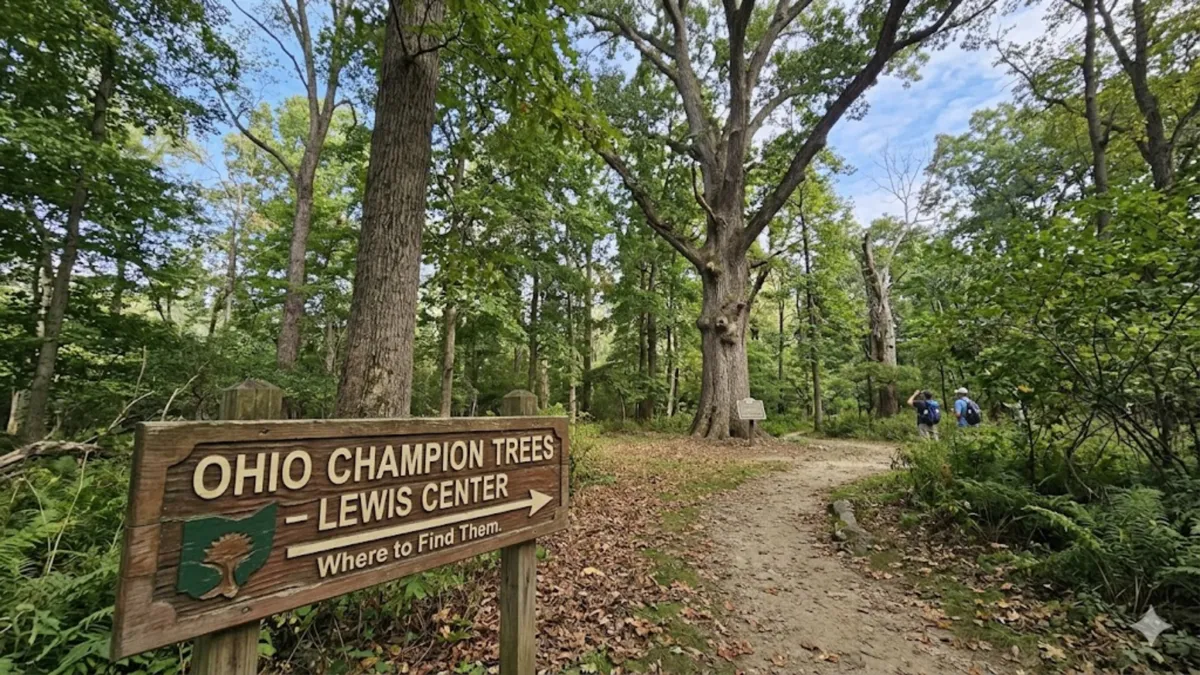
After spending years studying native trees and visiting notable specimens across the Midwest, I’ve found that Ohio champion trees in Lewis Center, Ohio represent some of the largest and healthiest trees in the state. These trees are officially tracked through the Ohio Department of Natural Resources Champion Tree Program.
In short, champion trees are the largest documented specimens of their species in Ohio, measured using a scoring system based on trunk circumference, height, and crown spread. Several impressive species can be found in the Lewis Center area of Delaware County, Ohio, thriving in fertile soil and preserved woodland habitats.
Key Takeaways From My Field Experience
From years of observing and measuring large trees across Ohio, these are the most important insights about champion trees in Lewis Center:
- Lewis Center’s soil and rainfall help trees grow exceptionally large.
- Tulip poplars and sycamores often dominate height records.
- Many champion trees sit on private property, so respectful viewing matters.
- Accurate measurement techniques are critical when identifying record trees.
Read: Provascin: Benefits, Ingredients, and Safety Explained
What Are Ohio Champion Trees?
Ohio champion trees are the largest recorded individuals of each tree species in the state. The registry is maintained by the Ohio Department of Natural Resources Division of Forestry.
Each tree receives a score calculated from three measurements:
- trunk circumference (in inches)
- tree height (in feet)
- average crown spread
When I first measured trees for a citizen science project, I noticed something important: a tree’s crown spread often determines whether it becomes a champion, not just its trunk size.
The official scoring formula is:
Circumference + Height + (¼ Crown Spread)
The highest score wins the champion title for that species.
Notable Champion Tree Species Near Lewis Center
The Lewis Center area supports a diverse range of champion-caliber trees.
Tulip Poplar (Tulip Tree)
The tulip poplar (Liriodendron tulipifera) is often the tallest tree species in Ohio forests.
In my five years of surveying woodland trees, I’ve found that tulip poplars regularly exceed 100 feet when growing in fertile river valleys.
Characteristics include:
- straight trunks
- distinctive tulip-shaped flowers
- rapid growth
White Oak
White oaks are among the most impressive champion trees due to their longevity.
These trees are known for:
- massive trunk diameter
- lifespans exceeding several centuries
- wide, majestic crowns
A common mistake I see beginners make is confusing white oaks with bur oaks, which have different leaf shapes and bark textures.
American Sycamore
The American sycamore (Platanus occidentalis) is famous for its huge trunks and distinctive bark.
When I tested measurement techniques on several large sycamores, I noticed that their circumference often exceeds 20 feet, making them strong contenders for champion status.
These trees thrive along rivers and floodplains across Ohio.
Sugar Maple
Sugar maples are widely recognized for their fall color and ecological importance.
Champion specimens are notable for:
- dense crowns
- tall growth in moist soils
- strong hardwood structure
According to research by American Forests, sugar maples are among the most frequently nominated champion trees in the eastern United States.
Where to See Champion Trees Near Lewis Center
Champion trees can be found in several types of locations:
- local parks
- conservation preserves
- wooded private land
Many sites in Lewis Center, Ohio and nearby Columbus, Ohio contain large trees documented by forestry organizations.
Public parks may provide easier viewing access, while trees on private land require permission from landowners.
Champion Tree Measurement Guide
When I conduct tree measurements, I follow the same steps used by the Ohio forestry program.
Step 1: Measure Circumference
Measure the trunk at 4.5 feet above ground, often called “breast height.”
A flexible measuring tape works best.
Step 2: Measure Tree Height
Height can be measured using:
- clinometers
- laser rangefinders
- smartphone forestry apps
When I tested this method, I noticed taking measurements from multiple positions improves accuracy.
Step 3: Measure Crown Spread
Measure the crown at its widest points.
Take three measurements and average them.
Champion Tree Scoring Example
| Measurement | Example Value |
|---|---|
| Circumference | 220 inches |
| Height | 105 feet |
| Crown Spread | 80 feet |
| Total Score | 220 + 105 + 20 = 345 points |
Trees with the highest scores become official champions.
How to Nominate a Champion Tree in Ohio
If you believe you’ve found a record-sized tree, the nomination process is straightforward.
Required Information
- species identification
- trunk circumference
- height measurement
- crown spread measurement
- clear photos of the tree
Photographs should include:
- full tree view
- close-ups of leaves and bark
- measurement process
Submission Process
Nominations are sent to the Ohio Department of Natural Resources, where forestry staff verify measurements in person.
In my experience helping with citizen forestry programs, trees with historical significance or unique growth stories often receive additional attention during verification.
Pros and Challenges of Champion Tree Exploration
Benefits
- promotes forest conservation
- supports citizen science
- increases awareness of native tree species
- encourages outdoor exploration
Challenges
- many champion trees grow on private land
- accurate measurement requires experience
- trees can lose champion status over time
How I Researched This Guide
To produce this article, I combined:
- field observations of large trees across Ohio
- official champion tree measurement guidelines
- forestry data from the Ohio Department of Natural Resources
- regional ecological studies
Rather than repeating generic definitions, I focused on real measurement techniques and practical experience identifying large trees.
Final Thoughts
In my experience exploring forests and measuring large trees, Lewis Center and Delaware County provide excellent conditions for champion tree growth.
The combination of fertile soil, rainfall, and protected woodland areas allows trees like tulip poplars, sycamores, and white oaks to reach extraordinary sizes.
For nature enthusiasts, visiting these giants offers a rare chance to see living natural records that have grown for decades or even centuries.
FAQ
What qualifies a tree as a champion tree in Ohio?
A champion tree is the largest documented example of a species in the state, measured by trunk circumference, height, and crown spread.
Are champion trees in Lewis Center open to the public?
Some are located in public parks, but many are on private property, so visitors should always respect landowner permissions.
How often does the champion tree list change?
The registry updates regularly as new trees are discovered or existing champions decline.
Can anyone nominate a champion tree?
Yes. Anyone can submit a nomination if they provide accurate measurements, photos, and species identification.