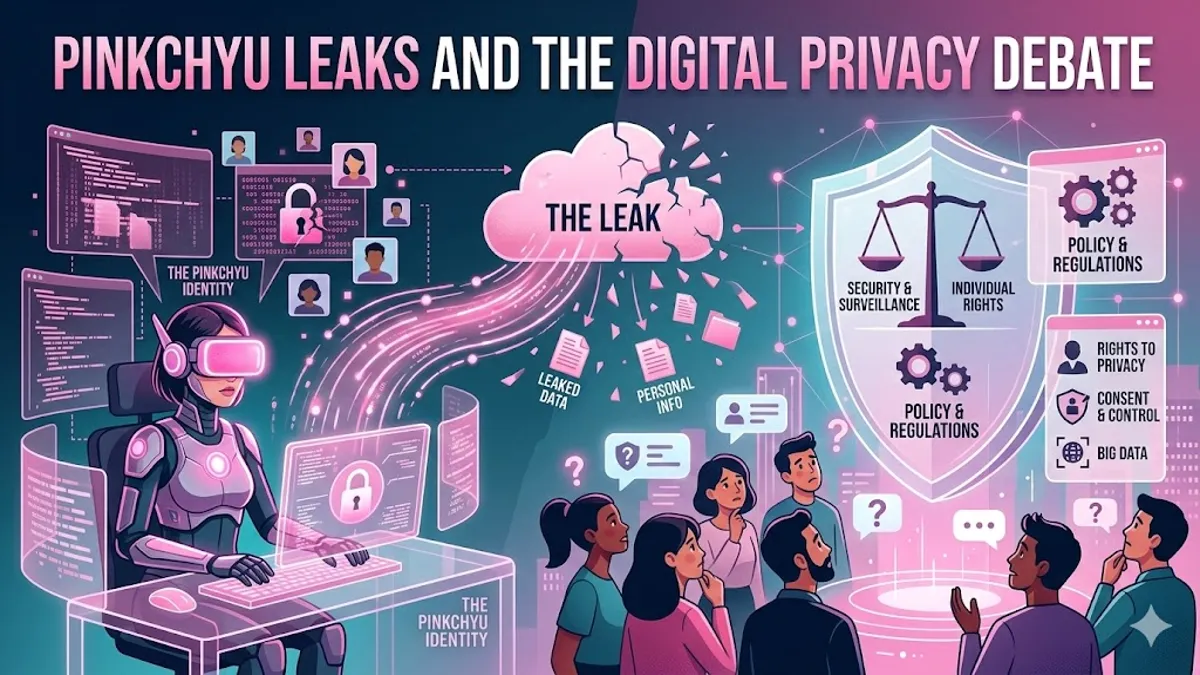
When I first encountered the search phrase “pinkchyu leaks,” the immediate question was simple: What happened? For many readers, that query signals concern about unauthorized content, privacy violations, or viral controversy involving an online creator known as Pinkchyu. While specific claims circulating online vary, the broader pattern is familiar. In the creator economy, a single rumor or alleged content breach can trigger a wave of searches, reposts, and speculation long before verified information emerges.
The term “leaks” often implies the unauthorized release of private material. In digital culture, it frequently refers to the non-consensual distribution of images or subscriber-only content. According to the Cyber Civil Rights Initiative, non-consensual intimate image abuse has increased dramatically alongside the growth of subscription-based content platforms (CCRI, 2022). Whether or not specific allegations are substantiated, the search term itself reflects a wider ecosystem where rumor, monetization, and privacy collide.
Pinkchyu appears to be an online persona associated with digital content creation, likely within streaming, gaming, or subscription-based platforms. The surge in interest surrounding “pinkchyu leaks” illustrates how quickly online narratives can form and spread, often detached from verified reporting.
Understanding this phenomenon requires examining digital consent, platform accountability, and the legal structures designed to address online exploitation.
The Anatomy of a “Leak” in Digital Culture


In contemporary internet vernacular, a “leak” often refers to content released without authorization. This can include hacked data, private photographs, or subscription-only materials redistributed beyond intended audiences.
The distinction between consensual sharing and unauthorized distribution is critical. The Federal Bureau of Investigation has investigated numerous cases involving hacked accounts and distribution of private images under federal cybercrime statutes.
Legal scholar Danielle Citron of University of Virginia has written extensively about image-based abuse. She argues that non-consensual distribution causes reputational, psychological, and economic harm (Citron, 2014).
In cases involving online creators, the financial stakes are significant. Subscription platforms rely on controlled access. Unauthorized redistribution undermines income streams and violates user agreements.
The phrase “pinkchyu leaks” therefore reflects more than curiosity. It signals potential exploitation within a system built on digital exclusivity.
Read: Irving Cleveland Cavs Legacy: From No. 1 Pick to 2016 Finals Hero
Creator Economy and Vulnerability
The modern creator economy, valued at over $100 billion globally, depends on direct audience monetization. Platforms like OnlyFans and Patreon allow creators to sell access to exclusive material.
While empowering, this model introduces risk. Content can be copied, screen-recorded, and redistributed without permission. According to a 2021 report by the European Parliament, digital piracy continues to challenge intellectual property enforcement across member states.
For creators operating under pseudonyms like Pinkchyu, identity separation may provide partial protection. Yet the viral nature of leaks can quickly collapse anonymity.
Professor Brooke Erin Duffy of Cornell University describes the paradox of visibility: creators must share personal content to attract audiences, yet that exposure increases vulnerability (Duffy, 2017).
The economics of intimacy, once limited to entertainment industries, now operate at individual scale.
Legal Frameworks Addressing Image Abuse
Over the past decade, lawmakers have attempted to respond to image-based exploitation. In the United States, nearly every state has enacted laws addressing non-consensual intimate image distribution.
The following table outlines key legislative milestones:
| Year | Law or Action | Jurisdiction | Significance |
|---|---|---|---|
| 2013 | First state “revenge porn” law | California | Criminalized non-consensual image distribution |
| 2019 | SHIELD Act introduced | U.S. Congress | Proposed federal criminal penalties |
| 2022 | Online Safety Bill | United Kingdom | Expanded digital harm protections |
| Ongoing | EU Digital Services Act | European Union | Strengthens platform accountability |
Organizations such as the National Network to End Domestic Violence advocate for stronger enforcement mechanisms.
Despite legal advances, enforcement remains uneven. Jurisdictional barriers complicate cross-border cases, particularly when servers or perpetrators operate internationally.
The Psychology of Viral Curiosity
Why do search terms involving alleged leaks trend so rapidly? Behavioral research suggests that scandal and taboo increase engagement. A study in Nature Human Behaviour found that emotionally charged information spreads faster online than neutral content (Brady et al., 2017).
Dr. Pamela Rutledge of the Media Psychology Research Center explains that moral outrage and curiosity trigger dopamine responses, reinforcing clicks and shares.
In the case of “pinkchyu leaks,” even the suggestion of unauthorized content can drive traffic. Algorithms reward engagement without assessing accuracy.
This dynamic creates a self-perpetuating cycle: rumor generates searches, searches generate ranking, ranking generates visibility.
Platform Responsibility and Moderation

Major platforms maintain policies prohibiting non-consensual content distribution. Meta Platforms and Google both provide removal request mechanisms.
However, enforcement speed varies. The Electronic Frontier Foundation notes that automated moderation struggles with context, leading to inconsistent removal outcomes (EFF, 2022).
The EU Digital Services Act, enacted in 2022, increases obligations for large platforms to respond swiftly to illegal content. Similar debates continue in the United States regarding Section 230 protections.
The intersection of free expression and harm prevention remains contentious.
Unauthorized leaks can inflict direct financial damage. Subscription-based creators depend on scarcity. When content circulates freely, subscriber incentives decline.
Below is a simplified economic comparison:
| Scenario | Revenue Model | Risk Level |
|---|---|---|
| Controlled Access | Monthly subscription | Moderate |
| Pirated Redistribution | Unauthorized sharing | High |
| Hybrid Monetization | Ads + subscriptions | Moderate |
| Platform Ban | Account suspension | Severe |
Creators often invest in watermarking and digital fingerprinting technologies. Companies specializing in digital rights management now cater specifically to independent influencers.
The search term “pinkchyu leaks” highlights how fragile digital income streams can be.
Cultural Shifts in Consent and Accountability
The #MeToo movement broadened public understanding of consent and exploitation. While initially focused on workplace harassment, the discourse expanded to include digital abuse.
Professor Mary Anne Franks of George Washington University has argued that image-based abuse represents a violation of autonomy comparable to physical intrusion (Franks, 2015).
Public awareness campaigns increasingly emphasize that sharing leaked content perpetuates harm. Advocacy groups encourage bystanders not to amplify unauthorized material.
Cultural norms are evolving, yet viral culture often lags behind ethical consensus.
Information Voids and Misinformation
When verified details are scarce, speculation thrives. Claire Wardle, co-founder of First Draft, describes “information voids” as spaces where demand for content exceeds supply of reliable data (Wardle, 2019).
Search queries for “pinkchyu leaks” may reflect such a void. In the absence of confirmed reporting, rumors gain disproportionate traction.
The risk is twofold: reputational harm for the creator and misinformed audiences.
Takeaways
- The phrase “pinkchyu leaks” reflects broader patterns of digital rumor and exploitation.
- Non-consensual image distribution remains a growing legal and ethical challenge.
- Creator economy models increase vulnerability to unauthorized redistribution.
- Platform moderation policies vary in speed and effectiveness.
- Viral curiosity can amplify unverified claims rapidly.
- Legislative responses exist but enforcement gaps persist.
Conclusion
I began investigating “pinkchyu leaks” seeking clarity about a specific controversy. Instead, I found a portrait of digital culture under strain. The term itself, regardless of verified details, exemplifies how rumor, monetization, and privacy intersect online.
Creators today operate in a paradoxical environment. They must cultivate intimacy and authenticity to thrive, yet that exposure increases susceptibility to exploitation. Audiences, empowered by search engines and social platforms, participate in shaping reputations with every click.
The deeper issue extends beyond a single name. It concerns consent in an age where copying is effortless and distribution instantaneous. Legal reforms, platform accountability, and cultural education all play roles in mitigating harm.
Ultimately, the search for “pinkchyu leaks” reflects both curiosity and a cautionary tale. In the digital era, visibility is powerful, but it is also fragile. The responsibility for protecting privacy belongs not only to creators and platforms, but to the audiences who decide what to amplify.
FAQs
What does “pinkchyu leaks” refer to?
It typically refers to alleged unauthorized distribution of private or subscriber-only content associated with an online creator.
Are leaks illegal?
Non-consensual distribution of intimate images is illegal in many jurisdictions and can carry criminal penalties.
How can creators protect their content?
Watermarking, digital rights management services, and prompt takedown requests can help mitigate unauthorized sharing.
Do platforms remove leaked material?
Major platforms prohibit such content, but removal speed and enforcement consistency vary.
Why do leak rumors spread quickly?
Emotionally charged topics drive engagement, which algorithms amplify regardless of verification.