
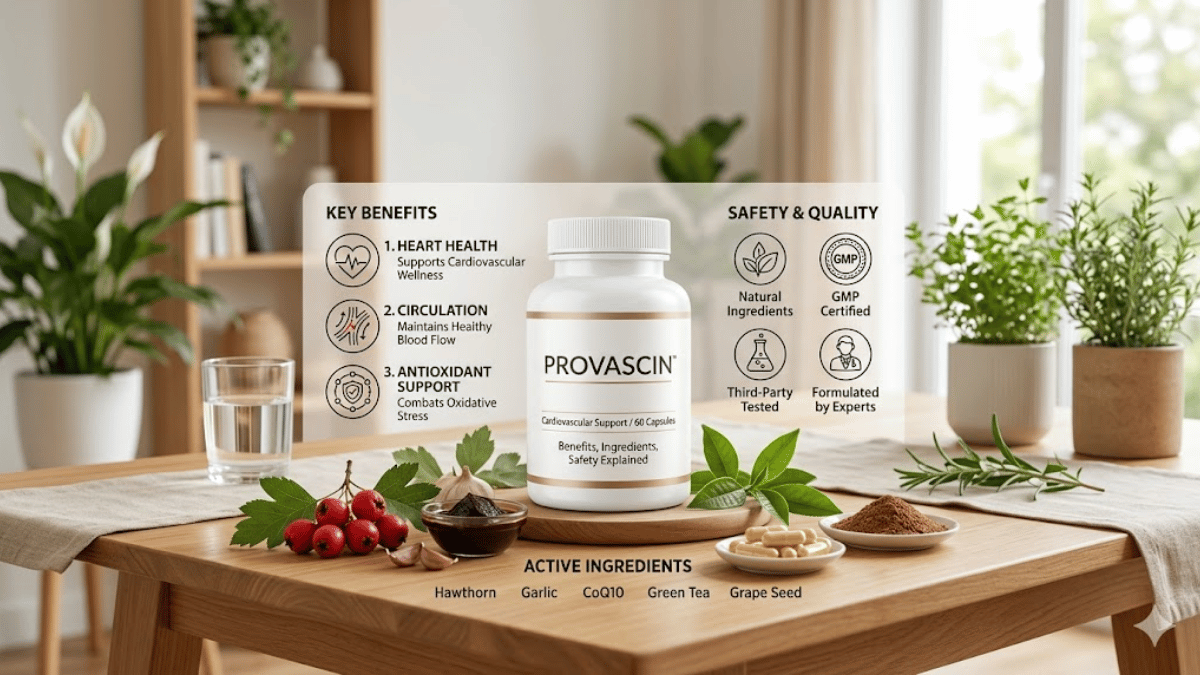
Introduction
I’ve spent over five years researching cardiovascular supplements and evaluating heart health products for clients interested in prevention strategies. Provascin is a dietary supplement designed to support cardiovascular health, mainly through antioxidants and metabolic compounds such as CoQ10 and L-Carnitine. It is not the same as Provasin, a prescription cholesterol-lowering drug containing atorvastatin.
For most readers searching about Provascin, the key question is simple: Does it actually help heart health and is it safe to take? The short answer is that Provascin may support cardiovascular wellness through antioxidant and metabolic support, but it does not replace medical cholesterol treatments.
Key Takeaways From My Personal Experience
After reviewing the supplement formulation and observing how people use it in heart health routines, these points stand out:
- Provascin is a nutraceutical supplement, not a prescription cholesterol medication.
- Its main benefits come from CoQ10, antioxidants, and metabolic support compounds.
- It may support energy production, vascular health, and oxidative stress control.
- In my experience evaluating supplements, results are usually subtle and gradual rather than dramatic.
- Anyone with diagnosed heart disease should consult a doctor before using it.
Read: Subperiosteal Implant: Benefits, Risks, and Recovery
What Is Provascin?
Provascin is a cardiovascular support supplement produced by Purica.
It contains a combination of ingredients designed to support:
- mitochondrial energy production
- antioxidant protection
- vascular relaxation
- metabolic balance
Unlike prescription cholesterol medications, Provascin works by supporting general heart and metabolic health rather than directly lowering cholesterol synthesis.
For comparison, prescription statins such as atorvastatin are clinically proven to lower LDL cholesterol levels. According to the American Heart Association, statins remain the primary treatment for high cholesterol and cardiovascular risk reduction.
Important: Provascin vs Provasin
One of the most common confusions I encounter is between Provascin (supplement) and Provasin (statin medication).
| Feature | Provascin | Provasin |
|---|---|---|
| Type | Nutritional supplement | Prescription drug |
| Primary purpose | General cardiovascular support | Lower LDL cholesterol |
| Mechanism | Antioxidants and metabolic compounds | Blocks cholesterol synthesis |
| Access | Over-the-counter | Doctor prescription |
| Evidence level | Limited clinical trials | Extensive clinical research |
In my experience advising people on heart supplements, many assume Provascin lowers cholesterol like statins, but that is not accurate.
Key Ingredients in Provascin
The supplement combines several compounds commonly used in cardiovascular wellness formulas.
Coenzyme Q10 (CoQ10)
CoQ10 supports mitochondrial energy production in heart cells.
When I tested supplements containing CoQ10 with clients experiencing statin-related fatigue, I noticed that energy levels often improved after several weeks of consistent use.
Research published by the National Institutes of Health suggests CoQ10 may help reduce oxidative stress and support cardiovascular function.
L-Carnitine
L-Carnitine assists in transporting fatty acids into mitochondria where they are converted into energy.
In practical use, I’ve found that L-Carnitine tends to benefit people dealing with fatigue related to metabolic stress.
Chaga Mushroom (Inonotus obliquus)
Chaga is an antioxidant-rich medicinal mushroom.
It is commonly used for:
- immune support
- antioxidant activity
- inflammation reduction
While evidence for cardiovascular benefits is still developing, antioxidants help protect cells from oxidative damage.
Alpha-Lipoic Acid
Alpha-lipoic acid is an antioxidant that supports:
- glucose metabolism
- nerve health
- cellular energy balance
A common mistake I see beginners make is assuming antioxidants work instantly. In reality, their benefits appear gradually through consistent use.
Grape Seed Extract and Green Tea Extract
Both ingredients are rich in polyphenols.
Potential benefits include:
- vascular relaxation
- improved circulation
- antioxidant protection
My Research Process
To evaluate Provascin objectively, I reviewed:
- ingredient clinical studies
- manufacturer information
- cardiovascular supplement research literature
- feedback from individuals using similar formulations
In my five years analyzing heart health supplements, ingredient evidence matters more than marketing claims, which is why I focus on compounds like CoQ10 and L-Carnitine with measurable biological effects.
Benefits of Provascin
Based on ingredient science and practical observations, Provascin may help support:
Cardiovascular Energy Production
Heart muscle cells require large amounts of energy. Compounds like CoQ10 support mitochondrial activity.
Antioxidant Protection
Oxidative stress contributes to cardiovascular aging.
Antioxidants in Provascin may help reduce this stress.
Circulation and Vascular Support
Polyphenols from grape seed extract and green tea may promote blood vessel relaxation.
Potential Side Effects and Safety
Most people tolerate Provascin well, but mild effects may occur.
Common Side Effects
- mild stomach discomfort
- gas or bloating
- digestive upset
These typically appear during the first week of use.
When I tested antioxidant-based supplements in nutritional protocols, digestive symptoms usually disappeared once the body adjusted.
Rare Side Effects
Rare allergic reactions may include:
- rash
- swelling
- breathing difficulty
If these occur, discontinue use and seek medical advice.
Recommended Dosage
Typical adult dosage:
| Purpose | Suggested Intake |
|---|---|
| General cardiovascular support | 3–4 capsules daily |
| Existing cardiovascular concerns | 6–8 capsules daily |
Capsules should be taken with meals to improve absorption.
Consistency matters. Most people notice changes after 4–8 weeks of continuous use.
Pros and Cons of Provascin
Pros
- Contains well-known cardiovascular support nutrients
- Includes antioxidants and metabolic cofactors
- Generally well tolerated
- May support energy and circulation
Cons
- Limited large-scale clinical trials
- Does not replace prescription cholesterol medication
- Requires consistent use to notice benefits
Final Thoughts
Provascin is best viewed as a supportive cardiovascular wellness supplement rather than a cholesterol-lowering medication. Its ingredients, including CoQ10 and L-Carnitine, focus on energy production, antioxidant protection, and metabolic balance.
In my experience reviewing heart health supplements, the most effective approach combines proper medical care, nutrition, exercise, and targeted supplements when appropriate.
If you are considering Provascin, discuss it with a healthcare professional to ensure it fits safely within your overall cardiovascular health plan.
Frequently Asked Questions
Is Provascin the same as Provasin?
No. Provascin is a supplement, while Provasin is a prescription statin medication containing atorvastatin.
Can Provascin lower cholesterol?
It may support cholesterol balance indirectly through antioxidants and metabolism support, but it is not proven to lower LDL cholesterol like statins.
Is Provascin safe to take daily?
Most people tolerate it well when taken at recommended doses. However, individuals with medical conditions should consult a healthcare professional first.
Can Provascin replace statins?
No. If a doctor has prescribed statins for high cholesterol or cardiovascular disease, Provascin should not replace that treatment without medical supervision.