
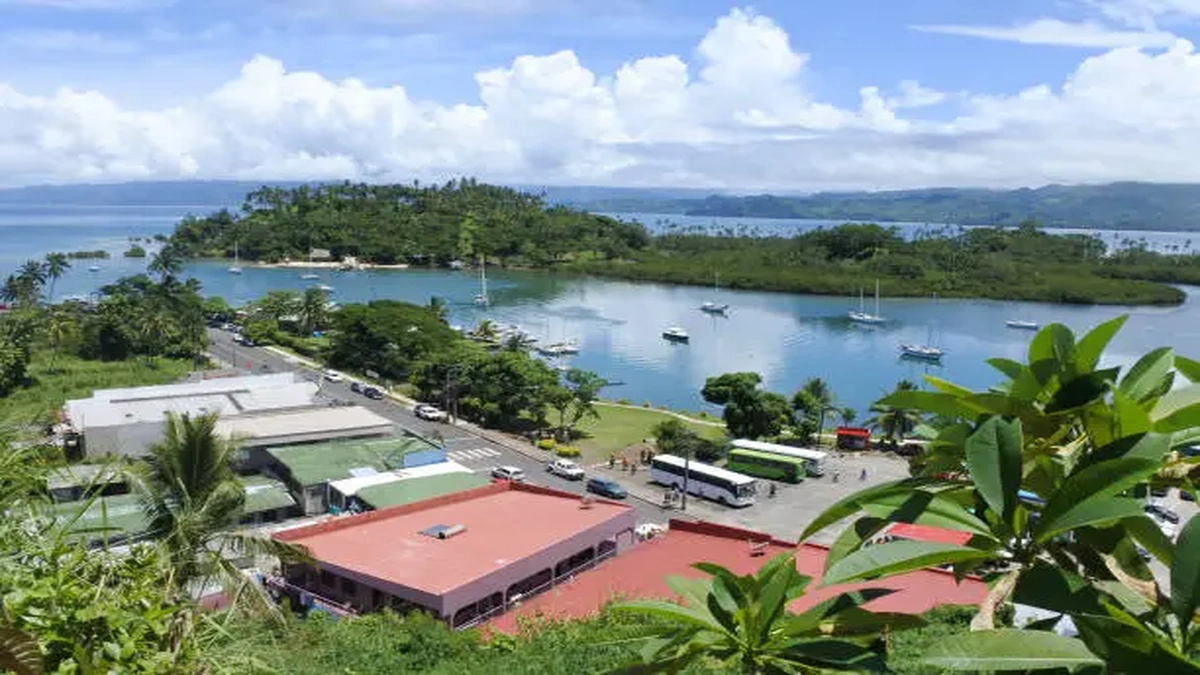
When I first began tracing the roots of Lautoka’s nickname, Sugar City, the answer revealed itself almost immediately in the sweep of cane fields stretching inland from Fiji’s western coast. Lautoka earned its title because it sits at the heart of the country’s sugarcane belt, anchored for more than a century by the Lautoka Sugar Mill and the port that ships its harvest abroad. Within a few minutes of examining its history, one sees how sugar shaped not only the skyline but the livelihoods, migration patterns and civic identity of this Pacific city. – sugar city lautoka.
Located on the west coast of Viti Levu, Fiji’s largest island, Lautoka is the country’s second largest city and one of its most industrious. Its story is inseparable from the rise of commercial sugar production in the late 19th and early 20th centuries. From mill whistles at dawn to ships loading cargo at dusk, sugar established the rhythms of daily life. Over generations, the industry influenced settlement, trade and culture, transforming a coastal settlement into a bustling urban center whose identity remains tied to the land and labor that built it.
Read: Unleash Your Creativity with Worfle: The Ultimate Writing and Brainstorming Tool
Foundations in Cane and Commerce
Lautoka’s emergence as Sugar City began with the expansion of commercial sugar production during colonial rule. By the turn of the 20th century, cane fields blanketed wide areas of western Viti Levu. The construction of the Lautoka Sugar Mill in the early 1900s cemented the city’s economic role. The mill became a magnet for workers, transport operators and merchants, generating a network of rail lines, loading stations and supply routes that connected farms to factory and factory to port. – sugar city lautoka.
The sugar industry created a structured economic ecosystem. Farmers cultivated cane on leased plots. Rail or truck operators moved harvested cane to the mill. The mill processed raw cane into sugar for export. The port facilitated international trade. Each step supported employment and small businesses, from equipment repair shops to neighborhood stores that served cane cutters and mill workers. Over time, this integrated chain turned Lautoka into a regional industrial hub.
The Economic Backbone of Sugar
| Component | Role in Lautoka’s Economy |
|---|---|
| Sugarcane farms | Primary agricultural production |
| Lautoka Sugar Mill | Processing and employment center |
| Transport networks | Movement of cane to mill |
| Port facilities | Export gateway for sugar |
| Support services | Retail, maintenance, logistics |
The presence of centralized processing distinguished Lautoka from smaller rural settlements. The mill did not merely process crops. It organized time, wages and seasonal labor cycles. Crushing season brought heightened activity and income. Off season periods prompted maintenance, planning and anticipation. In this way, sugar influenced both macroeconomic flows and intimate household budgets. – sugar city lautoka.
Migration and the Making of a Multicultural City
Sugar production required labor, and labor reshaped Lautoka’s demographics. During the colonial period, indentured workers from India arrived under contracts to work on plantations. Known historically under the girmit system, these laborers and their descendants became an enduring part of the city’s social fabric. Over decades, communities established temples, mosques, schools and civic organizations, contributing to Lautoka’s pluralistic character.
Indigenous Fijian communities, Indo Fijians and later migrants from other Pacific and Asian regions formed neighborhoods defined less by rigid boundaries and more by shared economic dependence. Markets reflected this diversity, offering root crops, spices and fresh seafood side by side. Religious festivals, from Diwali to traditional Fijian ceremonies, punctuated the urban calendar.
A cultural historian of the Pacific once observed that Lautoka represents a living archive of migration and adaptation. The city’s identity cannot be separated from the interplay of plantation labor, maritime trade and local tradition. Sugar catalyzed demographic transformation, but it was community building that sustained it.
Urban Growth and Changing Landscapes
Population growth accelerated in the latter half of the 20th century. As Fiji gained independence in 1970, Lautoka was already firmly established as an industrial center. Residential suburbs expanded outward from the commercial core. Schools, hospitals and municipal buildings reflected both colonial architecture and post independence development. – sugar city lautoka.
The city’s urban footprint grew in response to economic opportunity. Workers sought proximity to the mill and port. Businesses clustered along main roads. Over time, Lautoka diversified modestly beyond sugar, developing light manufacturing, retail trade and service industries. Still, sugar remained the defining economic force.
Timeline of Key Milestones
| Period | Development |
|---|---|
| Early 1900s | Establishment of sugar mill |
| Mid 20th century | Expansion of rail and port facilities |
| 1970 | Fiji independence; urban consolidation |
| Late 20th century | Gradual diversification of economy |
| 21st century | Reform efforts and modernization |
Urban growth brought challenges. Infrastructure required upgrades. Housing demand strained planning capacity. Global sugar price fluctuations exposed economic vulnerability. Yet each challenge also prompted adaptation. Municipal authorities invested in roads and utilities. Policymakers debated diversification. Residents balanced tradition with modernity.
The Port as Artery of Trade
Lautoka’s harbor has long been central to its identity. Sugar shipments depart from docks that also handle other cargo and, increasingly, cruise vessels. The port connects Fiji to regional and global markets, reinforcing Lautoka’s strategic importance in Pacific commerce.
A maritime economist has noted that ports like Lautoka function as critical nodes in supply chains that extend far beyond their immediate geography. The city’s economic vitality depends not only on cane yields but also on shipping routes, trade agreements and global demand patterns. Every vessel that enters the harbor symbolizes continuity between past and present.
Beyond export, the waterfront shapes urban life. Fishing boats share space with cargo ships. Vendors sell produce nearby. The scent of salt air mingles with that of molasses during crushing season. The port embodies the city’s dual character as both agricultural heartland and maritime gateway.
Economic Pressures and Adaptation
The sugar industry has faced headwinds in recent decades. Global competition, aging infrastructure and climate variability have affected yields and profitability. Reform initiatives have aimed to modernize milling equipment, improve farm productivity and strengthen financial oversight.
An economic development analyst specializing in Pacific trade has argued that while sugar remains foundational, long term sustainability requires diversification. Tourism, education and small scale manufacturing offer complementary avenues for growth. Lautoka’s location near popular resort areas on the western coast provides potential synergy between industry and hospitality. – sugar city lautoka.
Yet adaptation must navigate complex realities. Many families remain directly or indirectly dependent on sugar related employment. Policy changes ripple through rural communities. Balancing reform with social stability is an ongoing task.
Everyday Life in Sugar City
For residents, Sugar City is more than an economic label. It is an atmosphere shaped by routine and memory. Early mornings during crushing season carry the low hum of machinery. Trucks loaded with cane rumble along highways. Children walk to school past fields that shimmer in the sun.
Markets bustle with traders whose livelihoods intersect with agriculture. Conversations in shops often turn to rainfall, harvest prospects or shipping schedules. The city’s pace is neither hurried metropolis nor isolated village. It occupies a middle ground, defined by steady industrial cadence and communal familiarity.
A cultural studies scholar once remarked that cities built around a single industry often develop a shared narrative that binds generations. In Lautoka, that narrative revolves around resilience, hard work and collective identity rooted in the land.
Takeaways
- Lautoka earned the nickname Sugar City due to its central role in Fiji’s sugarcane production and processing.
- The sugar mill established in the early 20th century remains a defining economic institution.
- Migration linked to plantation labor shaped the city’s multicultural character.
- The port connects Lautoka to regional and global markets, reinforcing its strategic importance.
- Economic diversification is increasingly important amid global market pressures.
- Sugar continues to influence daily life, employment and civic identity.
Conclusion
Lautoka’s story is not merely about sugar. It is about how a single crop can shape geography, demography and imagination. Fields of cane defined the early economy, but they also set in motion patterns of migration and community building that endure today. The city’s port extends its reach beyond Fiji’s shores, linking local labor to global trade. – sugar city lautoka.
As global markets shift and climate realities evolve, Sugar City stands at a crossroads familiar to many industrial towns. It must honor its heritage while seeking sustainable paths forward. Yet its history suggests resilience. Lautoka has weathered colonial transitions, independence and economic fluctuation. Its identity remains anchored in shared effort and cultural coexistence. In the hum of the mill and the rhythm of ships at harbor, one hears not only echoes of the past but the promise of adaptation in a changing Pacific world.
FAQs
What does the nickname Sugar City mean?
It reflects Lautoka’s central role in Fiji’s sugarcane production and the presence of its major sugar mill.
Where is Lautoka located?
Lautoka sits on the western coast of Viti Levu, Fiji’s largest island.
Why is sugar important to Lautoka?
Sugar drives employment, trade and much of the city’s historical development.
How did migration shape the city?
Indentured laborers and their descendants contributed significantly to Lautoka’s multicultural identity.
Is Lautoka dependent only on sugar?
While sugar remains foundational, the city has gradually diversified into services, trade and tourism.