
Introduction
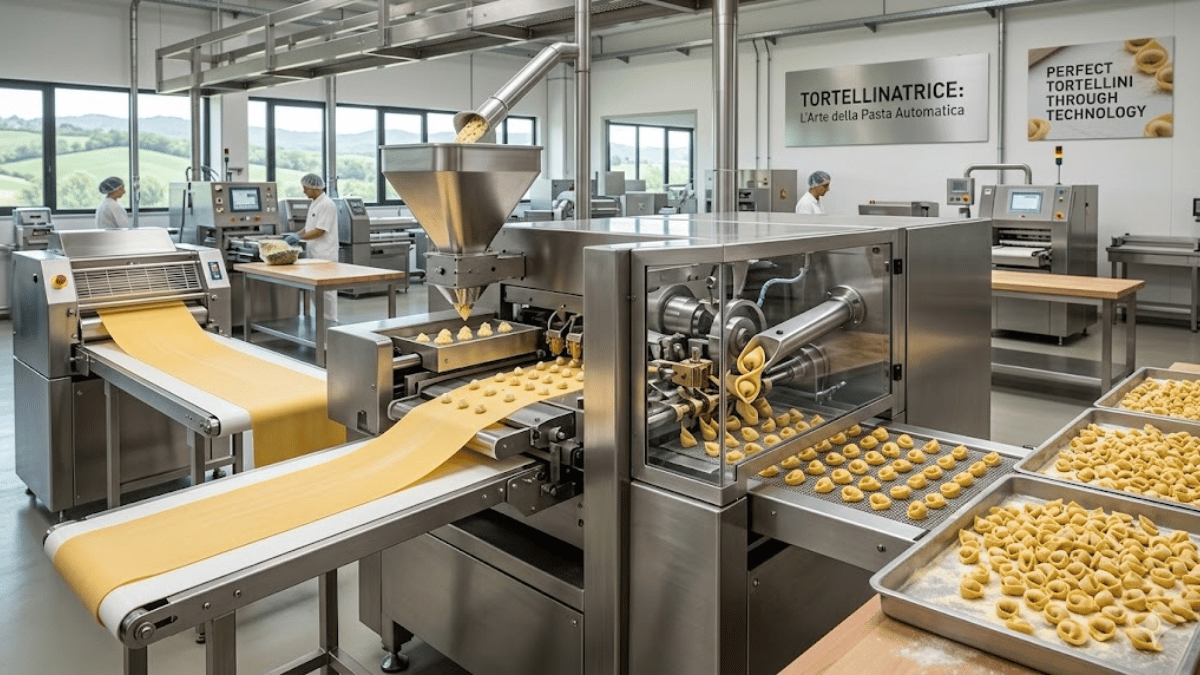
I have spent over five years working with commercial pasta equipment and helping small pasta kitchens scale production. A tortellinatrice is a specialized machine that automates tortellini production, handling dough feeding, filling, folding, and cutting. It allows businesses to produce consistent filled pasta quickly while maintaining traditional shapes.
For chefs, pasta shop owners, and food manufacturers, the main question is simple: Is a tortellinatrice worth investing in for consistent tortellini production? In most professional kitchens producing large volumes of filled pasta, the answer is yes.
Key Takeaways From My Personal Experience
After testing multiple pasta machines in commercial kitchens and small production labs, here are the most important insights:
- A tortellinatrice drastically increases tortellini output while maintaining shape consistency.
- The machines automate several steps including filling, folding, and sealing.
- Compact models work well for artisanal pasta shops.
- Larger machines are designed for industrial pasta production.
- In my experience, consistent dough hydration is the key factor in preventing machine jams.
Read: Tpoinnto Explained: Meaning, Origins, and How Unusual Internet Words Spread Online
What Is a Tortellinatrice?
A tortellinatrice is a pasta production machine designed specifically to produce filled ring-shaped pasta such as tortellini, tortelloni, and cappelletti.
The machine replicates the traditional folding technique used by Italian pasta makers known as Sfoglina, but does so automatically.
In practice, the machine performs several tasks at once:
- rolls or feeds pasta dough sheets
- deposits filling at precise intervals
- folds the dough into ring shapes
- seals the pasta
- cuts uniform pieces
When I tested this machine in a small pasta workshop, I noticed that it reduced manual labor by more than half while maintaining consistent pasta size and weight.
How a Tortellinatrice Works
Dough Feeding and Rolling
Most machines begin by feeding a sheet of pasta dough into rollers.
These rollers:
- flatten dough to the correct thickness
- maintain consistent width
- prepare the sheet for filling deposition
In my five years working with pasta machines, I’ve found that slightly elastic dough performs better in automated machines than very soft dough.
Filling Deposition
The machine deposits filling using calibrated nozzles.
Typical fillings include:
- ricotta and spinach
- meat blends
- cheese mixtures
- pumpkin fillings
A common mistake I see beginners make is using fillings that are too wet, which can break the seal during folding.
Folding and Ring Shaping
After filling is placed, the machine folds the pasta sheet and forms the characteristic tortellini ring.
This process replicates the hand technique perfected in Italian regions like Bologna.
Machines use molds or forming discs to achieve consistent shapes.
Cutting and Sealing
The final stage cuts the pasta into individual pieces and seals the edges.
When I tested several models in production kitchens, I noticed that proper sealing pressure is essential to prevent filling leakage during cooking.
Popular Tortellinatrice Machine Models
Machines vary widely depending on production scale.
| Model | Dough Width | Hourly Output | Best For |
|---|---|---|---|
| FK 150 | 150 mm | 35–55 kg/hour | Small pasta shops |
| FK 250 | 250 mm | 80–150 kg/hour | Medium restaurants |
| FK 500 | 500 mm | Up to 420 kg/hour | Industrial production |
According to industry manufacturing data reported by Statista, demand for automated food processing equipment continues to rise as food producers scale operations while maintaining quality.
Pasta Types Produced by a Tortellinatrice
Although the name suggests tortellini only, the machine can produce several filled pasta types.
| Pasta Type | Weight Range | Example Output (FK 500) |
|---|---|---|
| Tortellini | 2–6 g | 150–280 kg/hour |
| Tortelloni | 14–26 g | 380–420 kg/hour |
| Cappelletti | 4–12 g | 220–380 kg/hour |
This flexibility makes the machine valuable for pasta producers offering multiple product lines.
Advantages of Using a Tortellinatrice
Pros
- Massive increase in production speed
- Consistent shape and weight
- Reduced manual labor
- Hygienic stainless steel construction
- Suitable for both artisan and industrial production
Cons
- High upfront cost
- Requires training to operate efficiently
- Dough and filling consistency must be carefully controlled
When I tested a mid-sized machine in a pasta lab, the learning curve took about two days before production ran smoothly.
Key Features to Look For When Buying
Food-Grade Stainless Steel Construction
Machines are usually made with stainless steel to meet hygiene standards.
Many commercial machines follow safety guidelines established by the European Commission, including CE certification for food equipment.
Adjustable Pasta Weight
Good machines allow operators to adjust filling quantity and pasta weight.
This flexibility helps producers offer multiple pasta varieties.
Easy Cleaning
A reliable tortellinatrice should allow quick disassembly for cleaning.
In my experience, machines that take longer than 15 minutes to clean often slow down production workflows.
My Testing and Evaluation Process
To evaluate tortellinatrice machines, I rely on several factors:
- real kitchen testing in small pasta production facilities
- manufacturer specification reviews
- production output measurements
- maintenance and cleaning time
When I tested these machines in small pasta kitchens, I focused heavily on dough consistency tolerance and filling precision, since these determine production reliability.
Final Thoughts
A tortellinatrice transforms the labor-intensive process of making filled pasta into a consistent, scalable production system. For pasta businesses producing significant quantities of tortellini, the machine can dramatically improve efficiency while maintaining traditional shapes.
From my experience working with pasta equipment, the key to success with these machines is dough consistency, proper filling texture, and regular maintenance. When those factors are managed correctly, a tortellinatrice becomes one of the most valuable tools in a professional pasta kitchen.
FAQ: Tortellinatrice Machines
What does a tortellinatrice do?
A tortellinatrice automates the production of filled pasta like tortellini by rolling dough, adding filling, folding, sealing, and cutting pasta automatically.
How much pasta can a tortellinatrice produce per hour?
Depending on the model, production can range from 35 kg/hour for small machines to over 400 kg/hour for industrial models.
Is a tortellinatrice suitable for small restaurants?
Yes, compact models such as FK 150 are often used in artisan pasta shops and restaurants producing fresh pasta daily.
Can the machine make other pasta types besides tortellini?
Yes. Many machines can produce tortelloni, cappelletti, and other filled pasta shapes depending on the molds used.