
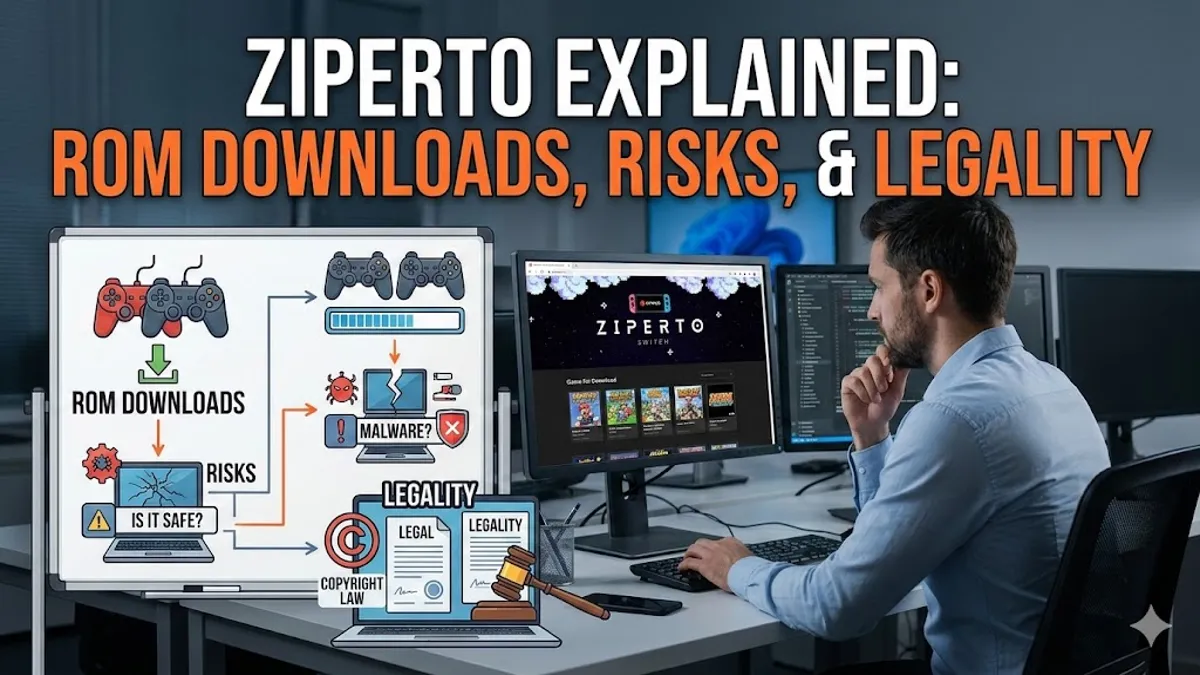
I remember the moment I first searched online for an old console game that had disappeared from official stores. The result that appeared again and again was a website called Ziperto. The platform promised thousands of downloadable games from systems such as the Nintendo Switch, Nintendo 3DS, Wii U and PlayStation Vita. For players chasing nostalgia or exploring retro titles, the promise was simple: free access to a massive digital library.
Yet within minutes it becomes clear that Ziperto is not just a gaming archive. It sits inside a complex and controversial ecosystem that blends gaming nostalgia, copyright disputes and cybersecurity risks. While the site promotes itself as a “digital park for gamers,” users often encounter aggressive advertising, misleading download pages and a maze of redirects before reaching the actual files.
The appeal is understandable. Many classic games are no longer sold or easily available through official platforms. Fans who want to revisit them often search for ROM files, which are digital copies of games originally stored on cartridges or discs. Emulators allow these files to run on modern devices, making old games playable decades after their release.
However, the reality of downloading ROMs from unofficial websites remains complicated. Copyright law, malware concerns and questionable advertising practices all shape the experience. Ziperto illustrates how the internet’s gaming underground continues to thrive even as publishers tighten legal enforcement and cybersecurity experts warn users about the risks.
Understanding what Ziperto offers, how it operates and why gamers still use it requires looking beyond the surface of a simple download website.
The Origins of ROM Sharing Communities
In the early years of the internet, gamers began sharing ROM files through forums, FTP servers and file-sharing networks. These communities emerged during the late 1990s and early 2000s when many older consoles had already disappeared from store shelves.
A ROM file represents the exact data stored on a game cartridge or disc. When paired with an emulator, the file allows a computer to simulate the hardware of classic consoles. Suddenly, a decades-old game designed for outdated hardware could run on a modern laptop.
The idea quickly spread among gaming communities. Fans who owned rare cartridges began digitizing them and sharing them online. These collections gradually expanded into organized archives containing thousands of titles from systems like the NES, Sega Genesis, Game Boy and PlayStation.
Over time, dedicated ROM websites appeared. They cataloged games, provided emulator downloads and created searchable libraries. For many gamers, these sites became the primary way to revisit childhood favorites or explore games that had never been released in their region.
But as these platforms grew, so did legal scrutiny. Game publishers argued that distributing ROMs without permission violated copyright laws. Several large ROM websites were eventually shut down through lawsuits and legal settlements.
Despite these actions, the demand for ROM files never disappeared. New sites continued to appear, filling the gap left by those that were removed.
Ziperto emerged as one of these modern ROM repositories.
Read: Zumikami: Exploring the Digital Identity Behind the Name
What Ziperto Is and How It Works
Ziperto operates as a centralized catalog of downloadable game files for multiple gaming systems. Instead of hosting the files directly, the website usually links to external file-hosting platforms where the downloads are stored.
Visitors browsing the site can search for games by console, release date or genre. Each entry typically includes a short description, screenshots and download links that redirect users to external hosting services.
The site covers a wide range of gaming platforms.
| Console | Common File Formats | Typical Purpose |
|---|---|---|
| Nintendo Switch | NSP, XCI | Installation on modified Switch systems |
| Nintendo 3DS | CIA, 3DS | Emulator play or hacked consoles |
| Wii U | WUX, WUD | Backup game images |
| PlayStation Vita | VPK | Installation on modified devices |
The download process rarely happens directly from Ziperto itself. Instead, users must navigate a chain of redirects and advertising pages before reaching the final file host.
A typical process often follows several steps. A user selects a game listing, clicks a download link, passes through advertising pages and waits through timed countdowns before the actual file link appears.
These steps are not accidental. They form the foundation of the website’s revenue system.
Advertising Networks and Redirect Systems
ROM websites rarely charge users directly for downloads. Instead, they rely heavily on advertising networks and redirect services that generate revenue based on user clicks.
Ziperto follows this model. When users click a download link, they are often redirected through several advertising pages before reaching the file host.
These redirects serve two primary purposes. First, they generate advertising impressions for the site owner. Second, they increase the likelihood that users will click sponsored links or promotional banners.
The process can include link-shortening services, countdown timers and pop-up pages designed to maximize ad exposure.
| Monetization Method | Description |
|---|---|
| Display advertisements | Banner ads and pop-ups on site pages |
| Redirect links | Advertising pages before downloads |
| Link shorteners | Paid clicks through shortened URLs |
| File host promotions | Faster downloads through premium subscriptions |
This model allows ROM sites to operate without charging users directly. However, it also creates an environment filled with misleading download buttons and intrusive advertisements.
For inexperienced users, identifying the correct download link can be confusing.
Security Risks and Malware Concerns
Cybersecurity experts frequently warn about the dangers associated with ROM-sharing websites. The risk often comes not from the game files themselves but from the advertising ecosystem surrounding them.
Aggressive ad networks may deliver pop-ups, fake download prompts or redirects to unrelated websites. Some of these pages attempt to trick users into installing browser extensions, toolbars or executable files disguised as legitimate downloads.
In certain cases, users have reported downloading compressed archives that contain unexpected files or bundled software.
Security analysts emphasize that deceptive download pages are common across ad-supported file-sharing networks. Because ROM websites rely on third-party advertising providers, they often have limited control over the content delivered through these networks.
The experience varies widely depending on the user’s technical awareness. Gamers who use ad blockers, antivirus software and private browsing tools may encounter fewer issues.
Less experienced users may find themselves navigating a confusing landscape of pop-ups and misleading links.
Why Some Gamers Still Use the Site
Despite the security warnings and legal uncertainties, Ziperto continues attracting visitors. The reason lies largely in the vast library of titles available through the site.
Many older games have never been re-released digitally. Others were published only in specific regions or were produced in limited quantities decades ago. Physical copies of these games can now cost hundreds of dollars on collector markets.
ROM sites provide a workaround. A player can download a digital version of a rare game within minutes rather than searching for expensive cartridges or discs.
For gamers interested in obscure or experimental titles, ROM archives can feel like digital museums.
The appeal is especially strong among retro gaming communities. Enthusiasts often discuss rare titles, fan translations and modified versions of games that exist only within these underground archives.
Ziperto attempts to cater to this audience by organizing games by platform and release type, including updates, downloadable content and modified versions.
The Legal Debate Around ROM Downloads
The legal status of ROM downloads remains one of the most debated topics in gaming culture.
Emulators themselves are generally legal because they are independently developed software that mimic console hardware. They do not contain copyrighted game data.
The controversy begins with the game files themselves.
Most commercial video games remain protected by copyright for decades. Distributing copies without permission from the copyright holder typically violates intellectual property laws.
Game publishers have taken increasingly aggressive action against ROM websites. Several large platforms were shut down after legal complaints or lawsuits from major gaming companies.
Legal experts also note that owning a physical copy of a game does not automatically grant permission to download a ROM version from the internet.
The only widely discussed legal scenario involves creating a personal backup from media you already own. Even that interpretation remains debated in many jurisdictions.
For most players, the legal environment surrounding ROM downloads remains uncertain and rarely enforced against individual users.
Preservation and the Gaming History Problem
Supporters of ROM archives often argue that these sites serve an important cultural purpose. Video games are part of modern history, yet many titles become unavailable as hardware ages and companies discontinue support.
Unlike books or films, video games depend heavily on specialized hardware to function. When consoles become obsolete, the games designed for them may effectively disappear.
Digital storefronts have helped preserve some titles, but large portions of gaming history remain inaccessible. Many games were never released digitally, and some were published only in limited regional markets.
Preservation advocates argue that community archives prevent these works from vanishing entirely.
ROM collections often include obscure titles, prototype builds and fan translations that would otherwise be lost.
Publishers, however, maintain that unauthorized distribution undermines intellectual property rights and commercial interests.
The debate between preservation and copyright enforcement continues to shape the ROM ecosystem.
The User Experience on ROM Sites
For gamers visiting sites like Ziperto, the experience can vary dramatically depending on technical knowledge.
A technically experienced user may install ad blockers, use secure browsers and carefully identify legitimate download links. In that environment, navigating the site becomes manageable.
An inexperienced user may encounter a very different experience.
| User Factor | Likely Experience |
|---|---|
| Ad blocker enabled | Fewer pop-ups and redirects |
| Antivirus protection | Safer file scanning |
| Experienced user | Able to avoid deceptive links |
| New users | Higher chance of misleading downloads |
These differences explain why user reports about the site often conflict. Some gamers report successful downloads with minimal issues. Others describe frustrating experiences filled with pop-ups and suspicious prompts.
The underlying structure of ad-driven ROM sites makes both experiences possible.
The Future of ROM Distribution
The future of ROM-sharing platforms remains uncertain as legal pressure and technological changes reshape the gaming industry.
Game companies have increasingly expanded digital libraries through subscription services and online storefronts. Collections of classic titles now appear on modern consoles through official channels.
However, these official releases represent only a small portion of gaming history. Thousands of games remain unavailable through legitimate platforms.
As long as that gap exists, ROM-sharing communities will likely continue filling the demand.
The underground ecosystem of ROM sites, forums and emulator developers has proven remarkably resilient. When one site disappears, others often appear in its place.
Ziperto represents one example of how these communities continue evolving within the broader gaming landscape.
Takeaways
• Ziperto is a website offering ROM files, emulator downloads and game updates for multiple consoles.
• The site relies on advertising networks and redirect pages to generate revenue.
• Users often navigate through multiple pop-ups and download pages before reaching files.
• Security concerns include misleading links, unwanted software and potential malware exposure.
• Downloading copyrighted ROMs without permission generally violates copyright law.
• Preservation advocates argue ROM archives help protect gaming history.
• The demand for retro games continues sustaining ROM-sharing communities.
Conclusion
Ziperto reflects the complicated relationship between technology, nostalgia and copyright law in the modern gaming world. For players searching for classic titles, the site promises instant access to thousands of games that may no longer exist in stores or digital libraries.
Yet the convenience comes with significant trade-offs. The ad-driven ecosystem surrounding ROM websites can expose users to misleading downloads, aggressive advertising and potential security risks. Legal questions surrounding copyrighted game files add another layer of uncertainty.
At the same time, the persistence of these sites highlights a deeper issue within the gaming industry. Large portions of video game history remain inaccessible through official channels, leaving enthusiasts to search elsewhere.
Until publishers find sustainable ways to preserve and distribute older titles, ROM archives will likely continue operating in the shadows of the gaming internet. For users exploring these platforms, curiosity about gaming history must always be balanced with caution and awareness of the risks involved.
FAQs
What is Ziperto
Ziperto is a website that provides downloadable ROM files, emulators and game data for consoles including Nintendo Switch, 3DS and Wii U.
Is Ziperto safe to use
Safety reports vary. Some users download files without issues, but the site’s advertising networks and redirect pages may expose users to potential malware or misleading downloads.
Are ROM downloads legal
Downloading copyrighted ROM files without permission from the game publisher generally violates copyright law in many countries.
Are emulators illegal
No. Emulator software itself is usually legal because it does not include copyrighted game content.
Why do people download ROMs
Gamers often download ROMs to play older titles that are no longer sold or available through official digital stores.