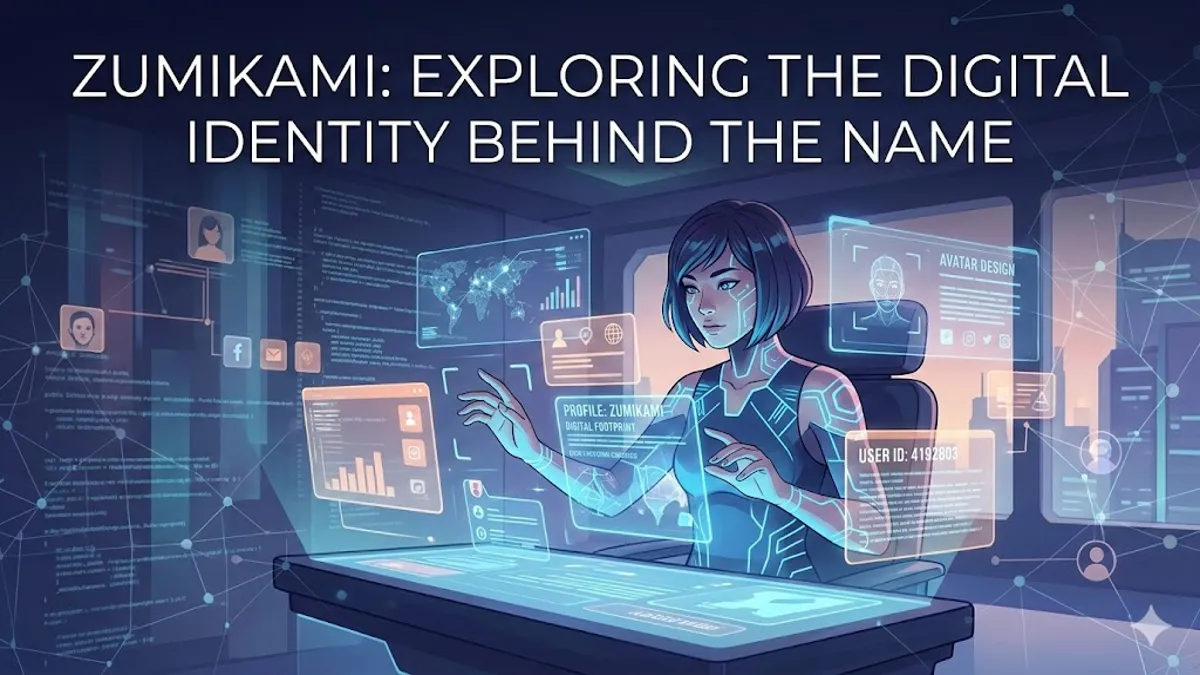
When I first typed “zumikami” into a search bar, I was looking for something concrete: a biography, a brand, perhaps an artist or emerging company. Instead, I found fragments. Zumikami appears not as a traditional public figure or institution, but as a digital identifier circulating across online spaces. For readers searching for clarity, the available evidence suggests that zumikami functions primarily as a username, alias, or emerging digital persona rather than a formally established entity.
That ambiguity is instructive. In the era of networked platforms, names often precede narratives. A handle can accumulate attention long before context catches up. According to research from the Pew Research Center, 84 percent of Americans say they use the internet to look up information about other people (Auxier & Anderson, 2021). The act of searching itself becomes a mechanism of identity formation.
Zumikami’s growing digital footprint illustrates how visibility is constructed in contemporary culture. Search interest may stem from social posts, gaming communities, creative platforms, or algorithmic recommendations. Regardless of origin, the name now exists within searchable memory.
To understand what zumikami represents, it is necessary to examine not only the individual or brand behind the name, but the infrastructure that allows such names to surface, circulate, and persist.
The Emergence of Digital Handles

Usernames have become modern calling cards. In online forums, multiplayer games, and social networks, handles often carry more weight than legal identities. Zumikami appears to fit this pattern.
The rise of persistent digital handles dates to the early internet message boards of the 1990s. With the expansion of platforms like Reddit and Twitter, now rebranded as X, pseudonymous identities gained mainstream visibility. A handle could accumulate followers, reputation points, and cultural influence independent of offline credentials.
Sociologist Erving Goffman’s concept of self presentation in public life has been revisited in digital scholarship to explain this phenomenon. Professor Alice Marwick of University of North Carolina at Chapel Hill argues that online self branding allows individuals to curate perception at scale (Marwick, 2013).
If zumikami functions as a digital alias, its resonance likely stems from consistent platform usage, community participation, or creative output.
Algorithmic Amplification and Search Behavior
Search engines amplify what users repeatedly seek. The Google algorithm evaluates relevance through engagement metrics, backlinks, and user interaction patterns.
Research published in Science by scholars at the Massachusetts Institute of Technology found that information spreads rapidly online when novelty and emotional engagement intersect (Vosoughi, Roy, & Aral, 2018). Even a relatively unknown name can gain traction if associated with viral content or niche community discussion.
Zumikami’s search presence may reflect such algorithmic dynamics. Sudden spikes in attention can occur when a name is shared widely across platforms like TikTok or Instagram.
Dr. Zeynep Tufekci of Princeton University has written that algorithmic curation reshapes public discourse by accelerating exposure cycles (Tufekci, 2015). In this environment, visibility can precede verification.
Zumikami’s appearance in search queries suggests participation in this broader attention economy.
Read: Certified Industrial Accountant Powering Profits Through Precision Strategic
Digital Identity Formation in the 2020s
Identity in digital spaces is layered. A name can function simultaneously as a personal brand, creative signature, and community symbol.
Psychologist Sherry Turkle of Massachusetts Institute of Technology has observed that online platforms allow individuals to experiment with multiple selves (Turkle, 2011). The boundary between performance and authenticity becomes fluid.
If zumikami operates as a consistent alias across platforms, the name may represent an integrated digital persona rather than a transient trend. Consistency across gaming communities, art forums, or streaming platforms often builds recognition over time.
Below is a simplified model of how digital identities evolve:
| Stage | Description | Visibility Level |
|---|---|---|
| Creation | Username selected | Minimal |
| Community Engagement | Posts, comments, content creation | Moderate |
| Amplification | Shares, reposts, collaborations | High |
| Recognition | Cross-platform presence | Sustained |
| Institutionalization | Media mention or monetization | Expanded |
Zumikami’s presence appears to hover between engagement and amplification, reflecting an identity in development.
Cultural Resonance and Naming Aesthetics
Names carry aesthetic power. The phonetic structure of “zumikami” evokes Japanese linguistic patterns, though no verified evidence confirms geographic origin. The suffix “kami” in Japanese can mean spirit or deity, depending on context. Such linguistic resonance may contribute to memorability.
Cultural theorist Roland Barthes wrote that names function as signifiers shaped by cultural imagination. In digital culture, aesthetic uniqueness often increases searchability.
Gaming communities frequently favor distinctive handles. Platforms such as Twitch demonstrate how memorable usernames enhance brand potential.
Whether or not zumikami was chosen for cultural reference, its distinctive sound likely aids discoverability.
Privacy, Anonymity, and Exposure

Digital anonymity provides both freedom and risk. According to the Electronic Frontier Foundation, pseudonymity protects speech in online environments while also complicating accountability (EFF, 2022).
If zumikami represents a pseudonymous identity, privacy may be intentional. The ability to create, perform, and interact without linking to offline identity is a defining feature of digital culture.
However, anonymity can attract unwanted speculation. The Federal Trade Commission reported record identity theft complaints in recent years, reflecting broader vulnerabilities (FTC, 2023).
Balancing visibility and privacy becomes central for emerging digital personas.
Economic Dimensions of Online Recognition
Digital visibility can translate into economic opportunity. Influencer marketing spending surpassed $21 billion globally in 2023, according to industry reports.
Platforms such as YouTube and Twitch enable monetization through advertising revenue, sponsorships, and subscriber support. If zumikami functions as a creator identity, economic incentives may shape its growth trajectory.
Media scholar Brooke Erin Duffy of Cornell University has described the rise of “aspirational labor,” in which creators invest unpaid effort for potential future rewards (Duffy, 2017).
The possibility of monetization can intensify engagement and content production.
Comparing Digital and Traditional Identity Pathways
| Aspect | Traditional Public Figure | Digital Persona |
|---|---|---|
| Entry Point | Institutional endorsement | Self creation |
| Audience Growth | Gradual | Algorithm driven |
| Verification | Editorial vetting | Platform signals |
| Revenue | Contracts, salaries | Ads, subscriptions |
| Longevity | Structured career | Platform dependent |
This comparison clarifies the structural difference shaping names like zumikami. Digital personas operate within volatile ecosystems where platform policy changes can redefine reach overnight.
Information Voids and Speculation
Claire Wardle of Brown University has argued that “information voids” encourage rumor and conjecture when verified details are scarce (Wardle, 2019).
Zumikami’s limited documented biography creates such a void. Online audiences may fill gaps with assumptions, reinforcing search interest.
The phenomenon highlights a paradox: scarcity of information can intensify curiosity.
Timeline of Online Identity Evolution
| Year | Milestone | Cultural Impact |
|---|---|---|
| 2004 | Facebook launches | Real name networks expand |
| 2006 | Twitter launches | Real time identity broadcasting |
| 2011 | Instagram growth | Visual self branding |
| 2016 | TikTok predecessor Musical.ly merges | Short form video era |
| 2020s | Creator economy mainstream | Monetized digital identity |
Zumikami’s emergence aligns with this mature stage of the creator economy.
Expert Commentary
Dr. Nancy Baym of Microsoft Research has noted that online communities create “relational labor,” sustained interaction between creators and audiences (Baym, 2018). If zumikami maintains active engagement, community relationships likely anchor its presence.
Similarly, Professor Henry Jenkins of University of Southern California emphasizes participatory culture as central to digital identity (Jenkins, 2006). Visibility often depends on audience collaboration.
These frameworks situate zumikami within established scholarship on digital participation.
Takeaways
- Zumikami appears to function as a digital alias rather than a traditional public figure.
- Algorithmic amplification drives sudden visibility spikes.
- Distinctive naming enhances memorability and searchability.
- Online anonymity provides creative freedom but invites speculation.
- Economic incentives shape digital persona development.
- Information scarcity can increase public curiosity.
Conclusion
When I began exploring zumikami, I expected to uncover a biography. Instead, I encountered a portrait of digital identity in formation. The name exists within search engines, social feeds, and possibly creative communities, yet it resists conventional categorization.
That resistance reflects the era. Identity no longer requires institutional endorsement. It requires connectivity. Algorithms distribute attention, communities reinforce it, and search engines archive it.
Zumikami’s trajectory, whether fleeting or enduring, illustrates the fluid nature of recognition in the twenty first century. Visibility can arise from creativity, coincidence, or collective curiosity. What matters is participation within the network.
In this evolving landscape, names function as portals. They lead not only to individuals but to systems that shape how we see, search, and remember.
FAQs
What is zumikami?
Zumikami appears to be a digital username or emerging online persona rather than a widely documented traditional public figure.
Why is zumikami being searched?
Search interest likely stems from social media mentions, gaming communities, or algorithmic amplification.
Is zumikami linked to a specific platform?
Public data suggests cross platform presence rather than exclusive affiliation.
Can digital aliases become full time careers?
Yes, many creators monetize digital identities through advertising, sponsorships, and subscriptions.
Does anonymity protect online creators?
Anonymity can safeguard privacy but may also invite speculation or misinformation.